
When Should You Pressure Wash Your Home?
Many homeowners understand the importance of keeping their property clean, but one of the most common questions people ask is: when should you pressure wash your home? The answer depends on several factors including climate, environmental exposure, building materials, and how quickly contaminants accumulate on exterior surfaces.
In warm and humid regions like Florida, homes are exposed to conditions that encourage mold, mildew, algae, and dirt buildup. Frequent rain, coastal salt air, and high humidity levels accelerate this process. As a result, homes in areas such as Sarasota, Bradenton, Lakewood Ranch, and surrounding communities often require more frequent pressure washing than properties located in cooler or drier climates.
Understanding when to pressure wash your home can help prevent damage, maintain curb appeal, and extend the lifespan of exterior surfaces.
Signs That Your Home Needs Pressure Washing
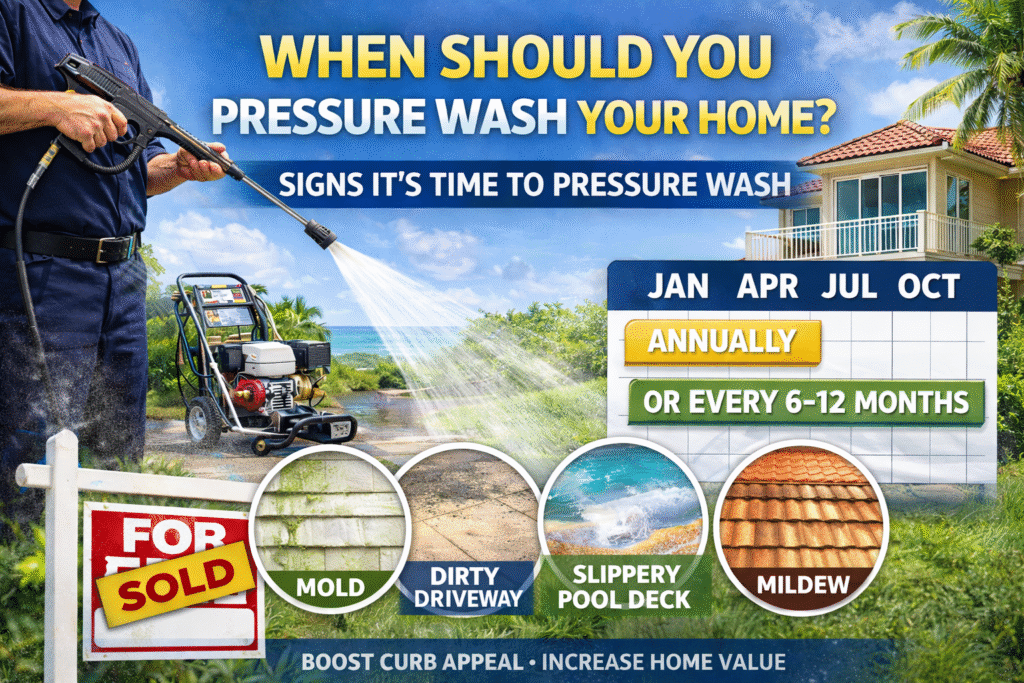
One of the easiest ways to determine when to pressure wash your home is by looking for visible signs of buildup on exterior surfaces. Over time, contaminants accumulate and begin to affect the appearance of a property. These substances can also cause long-term damage if they are not removed.
Common indicators that your home may need pressure washing include green algae growing on siding, black streaks appearing on roofs, dirt and stains on driveways or sidewalks, and mildew buildup on patios or pool decks. Pollen accumulation is another common issue, especially during certain seasons when airborne pollen coats outdoor surfaces.
If you notice that exterior surfaces look dull, discolored, or stained, pressure washing can restore their appearance and remove harmful contaminants.
Recommended Pressure Washing Schedule
While every home is different, most residential properties benefit from a routine exterior cleaning schedule. Establishing a maintenance routine helps prevent buildup from becoming severe and keeps surfaces looking clean throughout the year.
Typical cleaning intervals include annual driveway cleaning, yearly pressure washing of sidewalks and pool decks, house washing every one to two years, and roof cleaning every two to three years. Homes located in humid coastal environments may require more frequent cleaning due to accelerated algae growth.
Following a consistent schedule helps maintain the appearance of your home and protects exterior materials from deterioration.
Best Time of Year to Pressure Wash
In many parts of the country, pressure washing is typically performed during spring or early summer. However, Florida’s warm climate allows pressure washing to be performed year-round.
Spring is often a popular time for pressure washing because it removes pollen buildup and prepares homes for summer outdoor activities. Fall is another ideal time because it helps remove debris accumulated during the rainy season.
Regardless of the season, pressure washing can be performed whenever surfaces show signs of buildup.
Benefits of Routine Exterior Cleaning
Regular pressure washing offers several advantages beyond improving appearance. Removing mold, mildew, and algae helps protect exterior surfaces from deterioration. Clean surfaces also improve safety by reducing slippery areas around walkways and pool decks.
Routine cleaning also enhances curb appeal and contributes to maintaining property value. Homes that appear clean and well maintained are more attractive to visitors, neighbors, and potential buyers.
Frequently Asked Questions
How often should a house be pressure washed?
Most homes benefit from pressure washing every 12 to 18 months depending on climate conditions and environmental exposure.
Is spring the best time to pressure wash?
Spring is a popular time because it removes pollen and prepares homes for warmer months, but pressure washing can be performed year-round in Florida.
Can pressure washing damage siding?
When performed by professionals using proper techniques, pressure washing is safe. Delicate surfaces may require soft washing instead of high pressure.

No Comments