“`html
Exterior Cleaning & Surface Preparation Guide
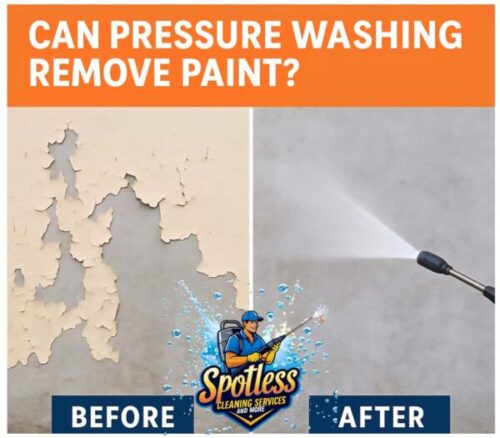
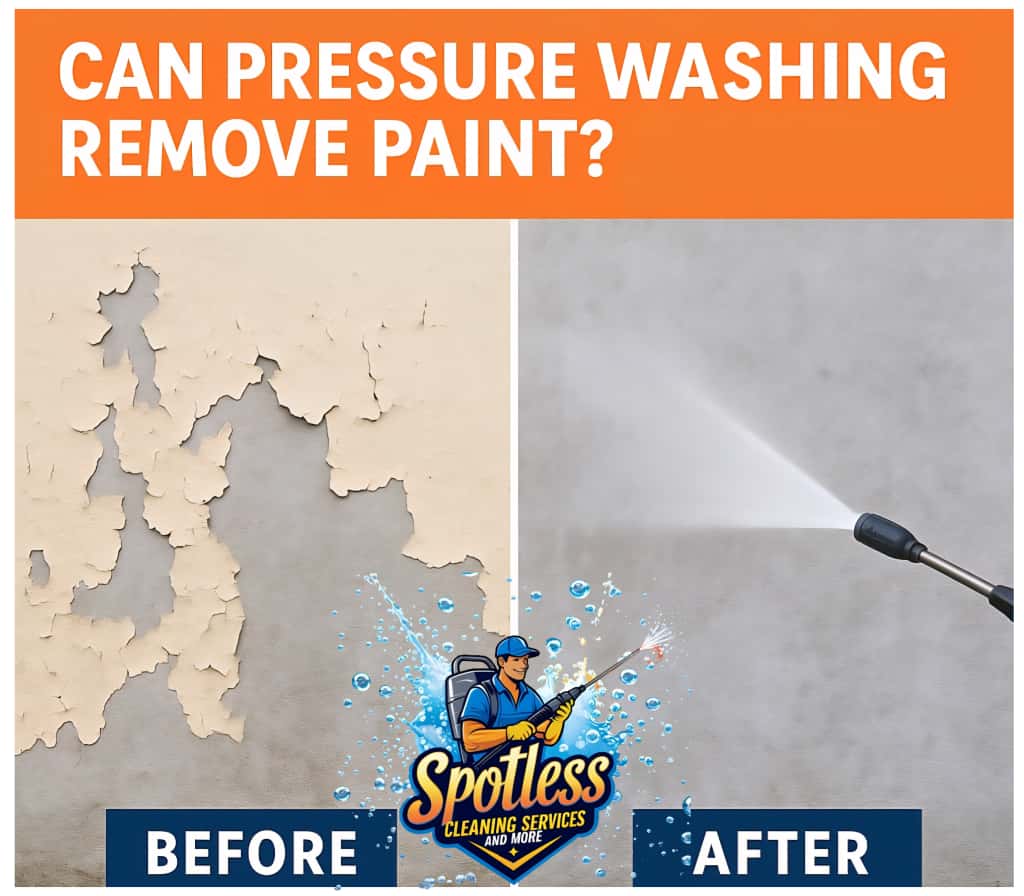
Can Pressure Washing Remove Paint?
Yes, pressure washing can remove some paint—especially loose, peeling or poorly bonded coatings—but whether it is appropriate depends on the surface, the paint, its condition and what you are trying to accomplish.
Pressure washing can sometimes help remove deteriorated paint from durable exterior materials or prepare a surface for additional refinishing work. It can also damage wood, siding, mortar, coatings and even concrete when excessive pressure or improper technique is used.
At Spotless Cleaning Services and More, we believe the first question should not be simply, “How much PSI will remove the paint?” The better question is, “What is the safest and most appropriate method for this particular surface?”
Quick Answer: Will a Pressure Washer Strip Paint?
It can. Loose, flaking or deteriorated paint may be removed by controlled pressure washing. Well-adhered coatings, specialty paints and deeply bonded finishes may require other preparation or removal methods. Some surfaces are also too vulnerable for aggressive pressure washing, so professional evaluation is important before attempting to strip paint with water pressure.
Have Paint, Overspray or Graffiti on an Exterior Surface?
Send us a photo of the affected area. Spotless Cleaning Services and More can evaluate the surface and help determine whether professional exterior cleaning or specialty removal is appropriate.
How Does Pressure Washing Remove Paint?
Pressure washing uses moving water to apply force to a surface. When paint has already lost adhesion, controlled water pressure can get beneath loose edges and separate portions of the coating from the material underneath.
But paint removal is rarely as simple as selecting a PSI number.
The result can be affected by:
- The type of paint or coating
- How old the coating is
- Whether the paint is already peeling or flaking
- The material beneath the paint
- Previous primers, sealers or coatings
- Water pressure and flow
- Nozzle selection
- Distance and angle from the surface
- Whether cleaning or stripping agents are appropriate
- Environmental and containment requirements
For that reason, maximum pressure is not automatically the best solution. The goal is to remove what can appropriately be removed while avoiding unnecessary damage to the underlying surface.
5 Things That Determine Whether Pressure Washing Can Remove Paint
Condition of the Paint
Loose, chalking, bubbling and peeling paint is generally easier to disturb than a coating that is firmly bonded to a properly prepared surface.
Surface Material
Concrete, brick, wood, stucco, vinyl, aluminum and composite materials have very different tolerances. A method appropriate for concrete could damage wood or siding.
Paint or Coating Type
Latex paint, oil-based coatings, masonry coatings, stains, sealers and specialty finishes do not all respond the same way to cleaning.
Previous Surface Preparation
Paint applied over a properly cleaned, prepared and primed surface may be considerably more difficult to remove than paint with poor adhesion.
The Desired Result
Removing a small paint spill from concrete is a different project from preparing an entire painted exterior for refinishing. The method should match the objective.
Can Pressure Washing Remove Paint From Concrete?
Concrete is durable, but it is not indestructible. Pressure washing may remove loose paint, overspray and certain surface coatings from concrete, particularly when the coating has weak adhesion.
However, aggressive pressure can also leave permanent wand marks, etching or inconsistent-looking areas. Older, softer or already damaged concrete deserves additional caution.
Some paints and coatings may require specialized treatment rather than simply increasing pressure.
For broader concrete maintenance, visit our
professional concrete cleaning services
.
If the affected area is a driveway, see our
driveway cleaning services
.
Can Pressure Washing Remove Paint From Brick?
Possibly, but brick and mortar require careful evaluation.
Brick itself can be durable, while mortar joints may be considerably more vulnerable. Older masonry, deteriorated mortar and specialty brick surfaces may be damaged by excessive pressure.
Paint may also penetrate masonry pores, making complete removal difficult without a broader restoration process.
If the objective is to expose previously painted masonry, cleaning alone may not provide a perfectly uniform bare-brick appearance. Expectations should be established before the work begins.
Can Pressure Washing Remove Paint From Wood?
Pressure washing can disturb paint on wood, but wood is also especially vulnerable to improper technique.
Excessive pressure can:
- Raise or tear wood fibers
- Create visible wand marks
- Gouge softer areas
- Drive water into joints
- Damage deteriorated boards
- Create additional sanding and preparation work
If a fence or deck is being prepared for painting or staining, the objective is usually to create a clean, stable surface, not to aggressively carve every trace of coating away with water.
For fence-specific cleaning, see our
professional fence cleaning service
.
Planning to Repaint an Exterior Surface?
Proper cleaning and surface preparation can make a major difference before repainting. If you’re dealing with peeling paint, dirt, organic buildup or exterior contamination, we can evaluate the surface and discuss the appropriate cleaning approach.
Can Pressure Washing Remove Paint From Siding?
This is an area where homeowners should be particularly cautious.
Vinyl, aluminum, painted siding and other exterior cladding systems can be damaged by excessive pressure or poor spray direction. Water can also be forced behind siding or into openings if improper technique is used.
If the objective is simply to clean the siding before repainting, complete paint stripping may not be necessary or desirable. Loose paint and contamination may need to be addressed while sound coatings remain in place according to the requirements of the new coating system.
For routine exterior cleaning rather than paint stripping, our
house washing service
uses cleaning methods selected for exterior building surfaces.
What About Metal and Aluminum?
Metal surfaces can sometimes tolerate cleaning well, but paint removal still depends on the coating, substrate and condition.
Unlike the old version of this article, we would not promise that paint can always be removed from aluminum or metal “without scratching.” Any aggressive cleaning or stripping method has the potential to alter a finish.
Oxidation, corrosion, factory coatings and existing paint condition should all be considered before attempting removal.
Pressure Washing vs. Soft Washing for Painted Surfaces
Pressure washing and soft washing are different tools intended for different situations.
Pressure Washing
Uses greater mechanical force and can be appropriate for durable hard surfaces and certain surface-preparation projects when properly controlled.
Soft Washing
Relies on substantially lower pressure combined with appropriate cleaning solutions and is generally used to clean organic buildup from exterior surfaces where high pressure may be inappropriate.
Soft washing should not be confused with a universal paint-removal method. Its purpose is generally cleaning rather than mechanically stripping bonded coatings.
When Should You NOT Use Pressure Washing to Remove Paint?
Pressure washing should not automatically be used whenever paint needs to come off.
Situations requiring additional caution include:
- Fragile or deteriorated wood
- Loose or damaged siding
- Weak mortar joints
- Damaged stucco
- Unknown coatings
- Delicate decorative surfaces
- Surfaces near vulnerable electrical components
- Historic materials
- Older painted surfaces where lead may be present
Important: Older Paint May Contain Lead
If you are dealing with paint on an older home or building, do not assume that the coating is harmless.
The U.S. Environmental Protection Agency warns that renovation and surface-preparation work disturbing paint in certain pre-1978 homes and child-occupied facilities may be subject to its Lead Renovation, Repair and Painting requirements.
EPA specifically addresses pressure washing under the RRP Rule and notes that containment may be required so paint debris and contaminated wastewater do not leave the work area. When lead-based paint may be involved, the project should be evaluated according to applicable federal, state and local requirements before removal begins.
Is Pressure Washing Good Preparation Before Painting?
Cleaning is an important part of exterior paint preparation because paint generally performs best when applied to a clean, sound and properly prepared substrate.
However, pressure washing by itself does not automatically make a surface ready for paint.
After cleaning, additional preparation may include:
- Allowing the surface to dry adequately
- Scraping remaining loose paint
- Sanding where appropriate
- Repairing damaged areas
- Addressing rust or corrosion
- Priming exposed or repaired material
- Following the coating manufacturer’s preparation requirements
That is why the old blanket statement to “wait 24–48 hours” has been removed. Drying time can change considerably depending on humidity, weather, material, sun exposure and the coating being applied.
Paint Spills, Overspray and Graffiti Are Different Problems
A few drops of latex paint on a driveway are not the same as a fully painted brick wall. Spray-paint graffiti is different from architectural paint. Industrial coatings are different again.
The appropriate response depends on what needs to be removed and what is underneath it.
For unwanted spray paint and exterior markings, visit our
professional graffiti removal services
.
Can Pressure Washing Damage the Surface Under the Paint?
Yes. This is one of the most important points in the article.
A pressure washer does not recognize the difference between paint you want removed and substrate you want preserved. If enough force is concentrated on the surface, damage can occur.
Wood
Can develop raised fibers, gouging and uneven texture.
Concrete
Can be etched or visibly marked when excessive pressure or poor technique is used.
Masonry
Mortar and older masonry can deteriorate under inappropriate cleaning pressure.
Siding
Can be damaged, dented or allow water intrusion when sprayed incorrectly.
Stucco
Cracked or deteriorated areas may be vulnerable to forceful cleaning.
Existing Coatings
Pressure can remove more material than intended or expose underlying defects.
Why Professional Evaluation Matters
A professional exterior cleaner should consider more than pressure alone.
At Spotless Cleaning Services and More, the appropriate approach depends on factors such as:
- Surface material
- Existing coating condition
- Type and extent of contamination
- Nearby landscaping
- Doors, windows and electrical components
- Drainage and runoff
- Whether the surface is being cleaned or stripped
- What will happen to the surface after cleaning
For general exterior cleaning, you can also explore our
professional pressure washing services
.
What Results Should You Expect?
One of the biggest mistakes in paint-removal marketing is guaranteeing that every painted surface can be restored to a perfectly bare, uniform appearance.
Real-world results vary.
Loose or deteriorated paint may release readily. Other coatings may remain strongly bonded. Pigments can sometimes leave discoloration. Porous masonry can retain traces of paint below the surface. Previous damage may become more visible once surrounding paint and dirt are removed.
For that reason, we prefer realistic expectations and surface-specific evaluation rather than making promises before seeing the property.
Need Paint, Overspray or Graffiti Removed?
Don’t risk damaging the underlying surface by guessing at pressure, chemicals or technique. Contact Spotless Cleaning Services and More and tell us what you’re dealing with.
Licensed & Insured • Residential & Commercial Exterior Cleaning • Sarasota & Manatee County
Frequently Asked Questions About Pressure Washing Paint
Can pressure washing remove all paint?
No. Pressure washing may remove loose or poorly adhered paint, but firmly bonded coatings can remain. Complete stripping may require additional mechanical, chemical or specialty removal methods depending on the surface and coating.
What PSI removes paint?
There is no universal PSI that safely removes paint from every surface. The appropriate pressure depends on the material, coating and condition. Selecting pressure based only on a number can cause unnecessary damage.
Can a pressure washer remove paint from concrete?
It can remove some paint from concrete, especially loose or poorly bonded paint, but complete removal is not guaranteed. Concrete can also be etched by excessive pressure.
Can pressure washing remove spray paint?
Sometimes, but spray paint and graffiti may require specialized treatments depending on the coating and substrate. See our graffiti removal services for more information.
Can pressure washing remove paint from wood?
It can disturb loose paint on wood, but aggressive pressure can also damage wood fibers and create gouges. Wood should be evaluated carefully before attempting paint removal.
Can I pressure wash siding to remove paint?
Caution is appropriate. Excessive pressure can damage siding or force water behind exterior materials. If your goal is repainting, cleaning and removing only unsound coating may be more appropriate than attempting to strip the siding completely with water pressure.
How long should a surface dry before repainting?
There is no universal drying period. Weather, humidity, surface material and coating requirements all matter. Follow the paint or coating manufacturer’s preparation and moisture requirements before applying the new finish.
Can pressure washing be used on a house built before 1978?
Older painted surfaces deserve additional consideration because lead-based paint may be present. If work will disturb painted surfaces in housing or facilities covered by EPA’s Lead Renovation, Repair and Painting Rule, applicable lead-safe requirements may apply.
Do you provide paint and graffiti removal?
Spotless Cleaning Services and More can evaluate paint, overspray, graffiti and other exterior cleaning concerns on residential and commercial properties. Contact us with photographs and information about the affected surface so we can determine whether the project is within our services.
Authoritative Resources
Learn More About Paint Removal & Surface Preparation
These third-party resources provide additional information about pressure washing, lead-safe work practices and preparing exterior surfaces for painting:
Let Spotless Evaluate the Surface Before You Strip It
Whether you’re dealing with paint overspray, graffiti, peeling coatings or a surface that needs cleaning before refinishing, contact Spotless Cleaning Services and More for a professional evaluation and free estimate.
Spotless Cleaning Services and More
Licensed & Insured • Residential & Commercial Exterior Cleaning
“`

No Comments