
Professional Concrete Cleaning Services in Sarasota & Manatee County
Our professional Concrete Cleaning Services restore driveways, sidewalks, patios, pool decks and commercial flatwork throughout Sarasota and Manatee County. We combine surface-specific pretreatment, commercial equipment and careful rinsing to improve stained concrete without treating every slab as though it were identical.
Why Concrete Needs More Than an Occasional Rinse
Concrete is durable, but it is not stain-proof. Its network of tiny pores can hold moisture, airborne soil, decaying plant material, automotive residue and dissolved minerals. In Florida, warm temperatures and frequent rainfall allow those contaminants to collect faster than many property owners expect. A slab that looked bright when it was installed can gradually become gray, green, brown or nearly black even when it is structurally sound.
Our Concrete Cleaning Services are designed around the condition of the concrete rather than a one-setting-fits-all approach. We consider the finish, age, porosity, existing coatings, drainage, surrounding landscaping and type of staining before deciding how the area should be treated. This matters because a broom-finished driveway, a sealed decorative patio and an older exposed-aggregate walkway may each require different pressure, chemistry and expectations.
This page focuses specifically on concrete. For a broader overview of hard-surface cleaning, visit our pressure washing services page.
Routine cleaning is also about function. Dark organic growth can make pedestrian concrete slick during rain, while stained entrances and walkways can make a well-maintained home or business look neglected. For general hard-surface work beyond concrete, visit our pressure washing services page. This page stays focused on the behavior, staining and maintenance needs of concrete itself.
Common Stains and Buildup Found on Florida Concrete
Different stains behave differently. Identifying the likely source helps determine whether the job needs ordinary concrete cleaning, a degreaser, a rust treatment or realistic expectations about permanent discoloration.
Algae & Organic Growth
Moist, shaded concrete commonly develops green or dark growth that can become slippery.
Dirt & Traffic Film
Foot traffic, vehicles, landscaping and runoff gradually create a dull gray or brown appearance.
Tire Marks
Hot tires and repeated turning can transfer rubber and dark marks to driveway and garage-apron concrete.
Oil & Automotive Fluids
Oil penetrates porous concrete. Treatment can improve it substantially, though deep shadows may remain.
Irrigation Rust
Iron-rich sprinkler water leaves orange staining that normally requires specialty rust treatment.
Leaf & Tannin Stains
Leaves, acorns, bark and tree debris release natural tannins that can soak into porous concrete and leave brown or tea-colored staining.
Fertilizer Stains
Iron-containing fertilizer granules can create small orange spots when they become wet.
Paint, Coatings & Sealer Issues
Paint, failing coatings and worn sealer require evaluation because ordinary washing may not remove them safely.
Concrete Cleaning Services for Different Finishes and Conditions
The word concrete describes many surfaces with different textures, colors, strengths and protective treatments. Recognizing those differences is essential before cleaning begins.
Broom-Finished Concrete
The familiar textured finish used on many driveways and sidewalks provides traction, but its grooves also hold soil, algae and fine organic debris. Even cleaning is important so the texture is preserved rather than scarred.
Exposed Aggregate
Exposed stone creates visual interest and traction. Aging or weakened aggregate should be evaluated carefully because overly aggressive cleaning can loosen material or exaggerate existing wear.
Stamped Concrete
Stamped surfaces may contain integral color, topical color, release agents and sealer. The cleaning method must account for those decorative layers instead of treating the area like bare gray concrete.
Sealed Concrete
Sealer changes how water and stains interact with a slab. A worn or failing coating may clean unevenly, and excessive pressure can remove portions of the finish.
Painted or Coated Concrete
Paint, acrylic coatings and specialty deck finishes can lift, chalk or peel when exposed to incompatible chemicals or excessive pressure. Test areas and reduced force may be necessary.
Older Weathered Slabs
Older concrete may contain cracks, spalling, repairs or a weakened surface paste. The objective is improvement without making existing deterioration more noticeable.
Decorative Concrete
Colored, textured and architectural concrete deserves a finish-sensitive approach that considers appearance as well as cleanliness.
Newer Concrete
Fresh concrete needs adequate curing time. Cleaning too soon or too aggressively can affect the young surface, so installer guidance and slab age should be considered.
Why the Finish Matters
According to the American Concrete Institute, concrete texture contributes to appearance and skid resistance. That is one reason responsible cleaning should preserve the intended finish rather than flattening or etching it. Learn more from the American Concrete Institute’s explanation of concrete finishing and texture.

Leaf Tannin Stains Can Make Clean Concrete Look Permanently Brown
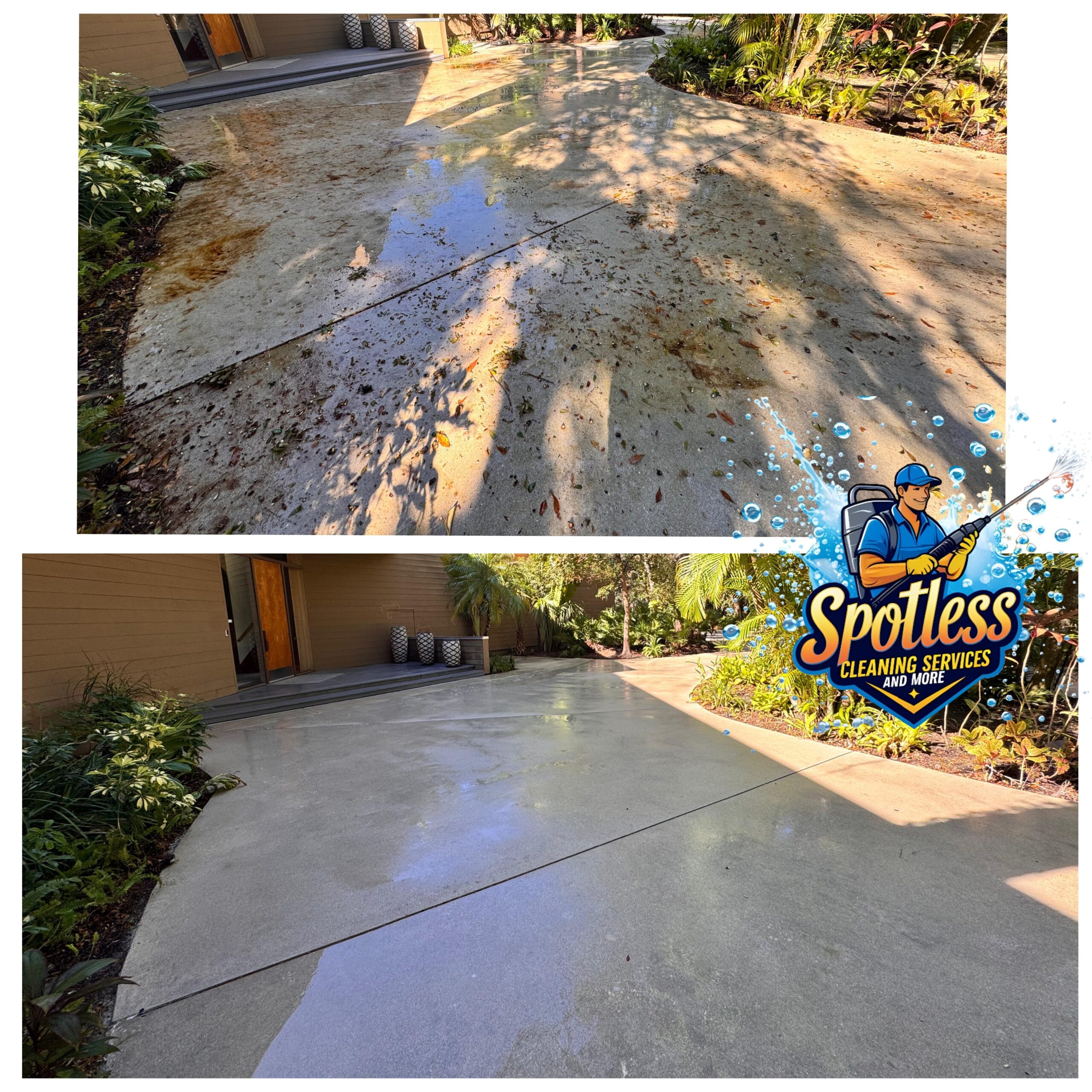
Leaves, acorns, seed pods, berries and bark contain natural pigments called tannins. When wet debris rests on porous concrete, those pigments can migrate into the surface and leave tan, brown, amber or nearly black outlines. Heavy tree cover can create layer after layer of staining, especially when sprinklers or rainfall repeatedly soak the same walkway.
Leaf stains are different from loose dirt. A quick rinse may remove the debris while leaving the brown discoloration behind. Professional treatment may require an organic-stain pretreatment, controlled dwell time, uniform surface cleaning and a detailed rinse.
A leaf-stained sidewalk may also contain algae, embedded soil and decayed organic matter at the same time. That is why the area can remain discolored after a simple rinse. The visible problem is not always loose debris sitting on top; part of the color may have penetrated the open pores of the slab.
Our Concrete Cleaning Services may combine general surface cleaning with a stain-specific treatment when tannin discoloration remains. Results depend on the age of the stain, the type of tree material, the porosity of the concrete and whether the source continues to drop debris. Fresh stains usually respond more readily than marks that have weathered through multiple seasons.
Why Concrete Stain Identification Comes Before Cleaning
Dark concrete does not always have one cause. Accurate identification helps us choose an appropriate treatment and explain what level of improvement is realistic.
Organic Growth and Environmental Soil
Algae, mildew, airborne dirt and decaying vegetation are among the most common causes of widespread discoloration. They tend to appear in shaded, damp locations and around irrigation overspray. Organic contamination often responds well to pretreatment, controlled surface cleaning and a thorough rinse.
Moisture is a major factor in recurring growth. The U.S. Environmental Protection Agency notes that mold requires moisture and that moisture control is central to limiting growth. Although its public guidance is primarily written for homes, the basic moisture relationship also helps explain why shaded exterior concrete repeatedly develops organic staining. Read the EPA’s moisture and mold overview.
Petroleum, Rubber and Vehicle Residue
Oil, transmission fluid, grease and rubber marks behave differently from algae. Petroleum can penetrate deeply, while tire marks may include rubber, heat-related transfer and plasticizers. Degreasing and repeated treatment can create substantial improvement, but a permanent shadow may remain when contamination has soaked into the slab.
From Residential Driveways to Commercial Walkways
We adjust the cleaning method to the age, finish, condition, coating and use of the concrete.
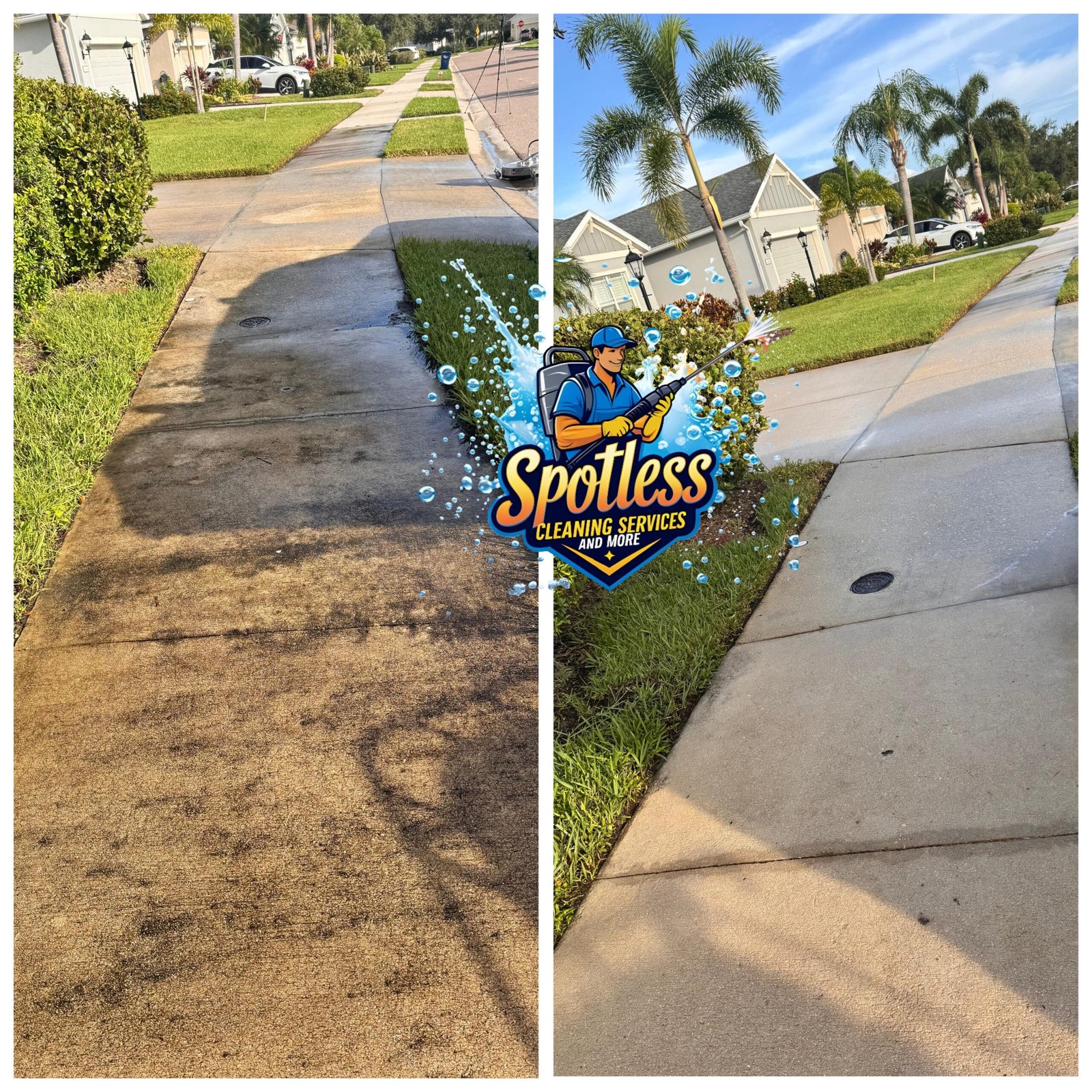
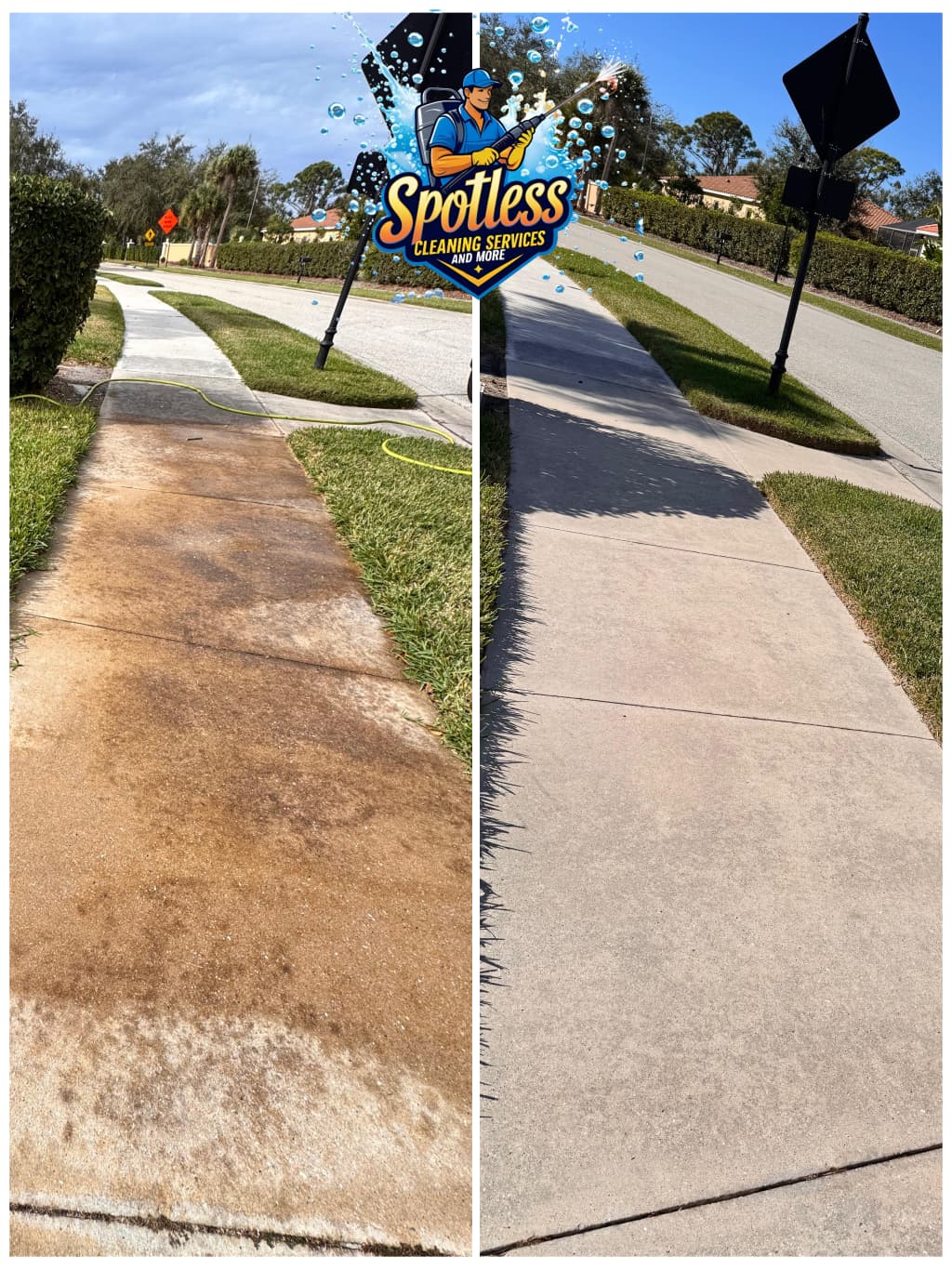
Real Driveway and Sidewalk Cleaning Projects
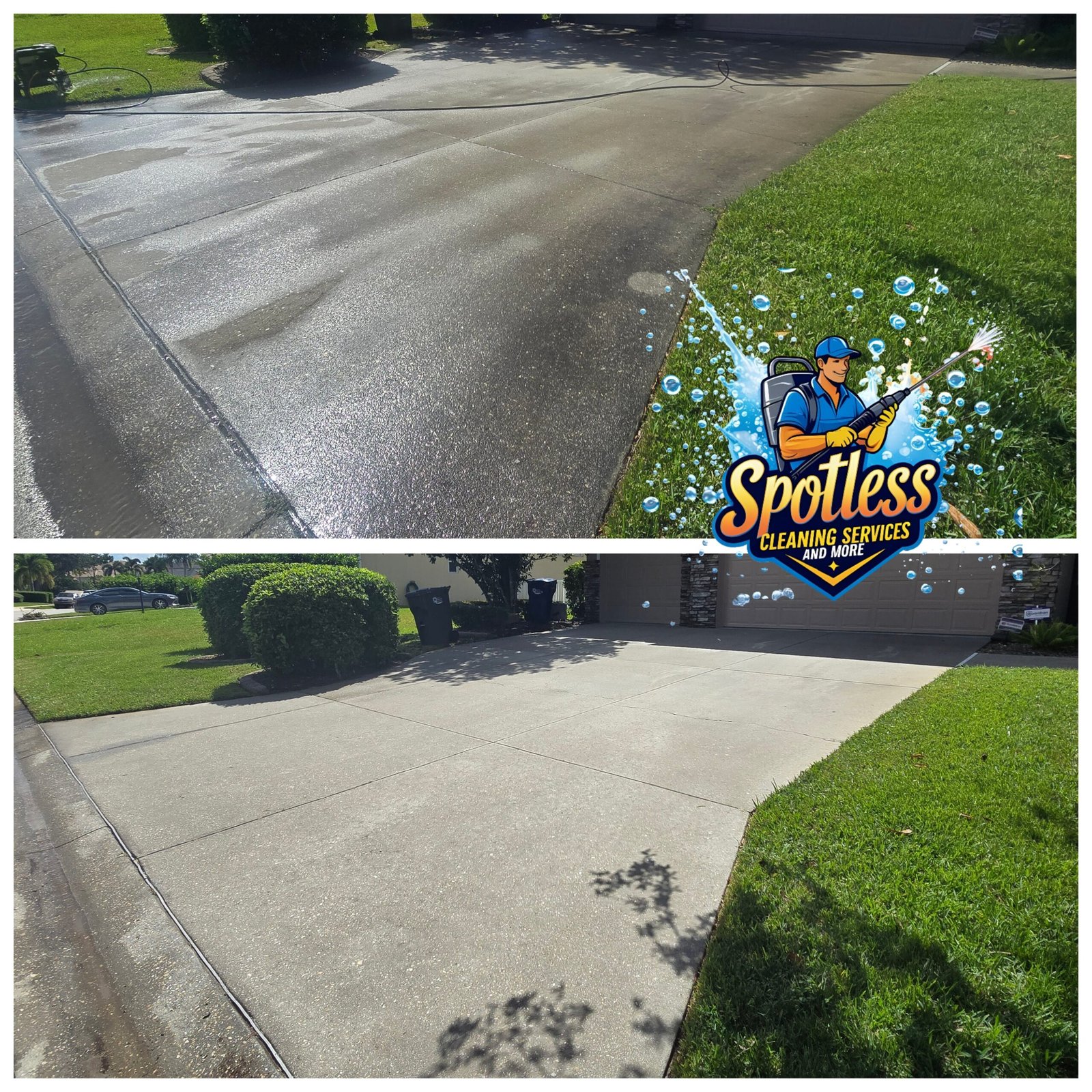
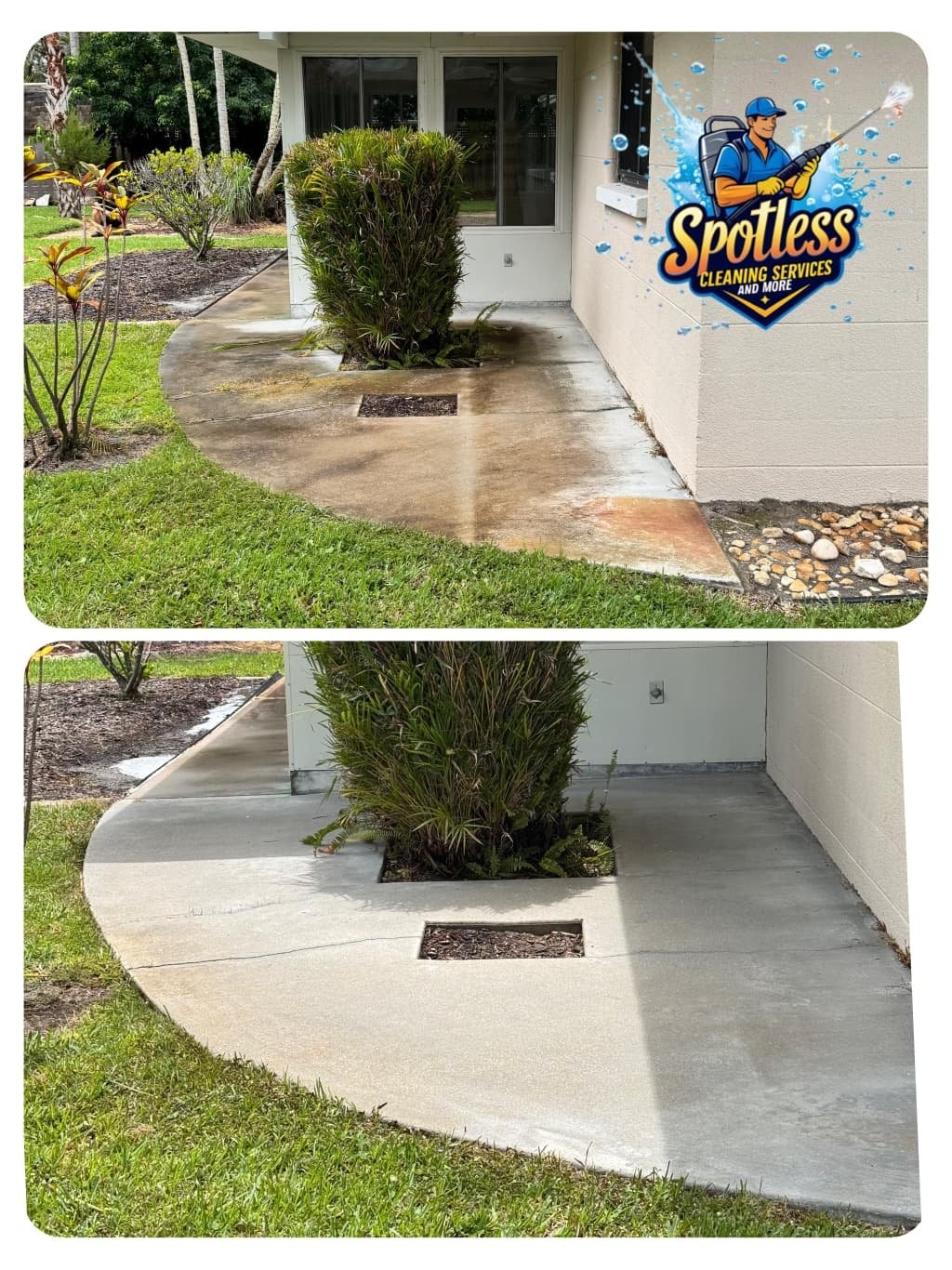
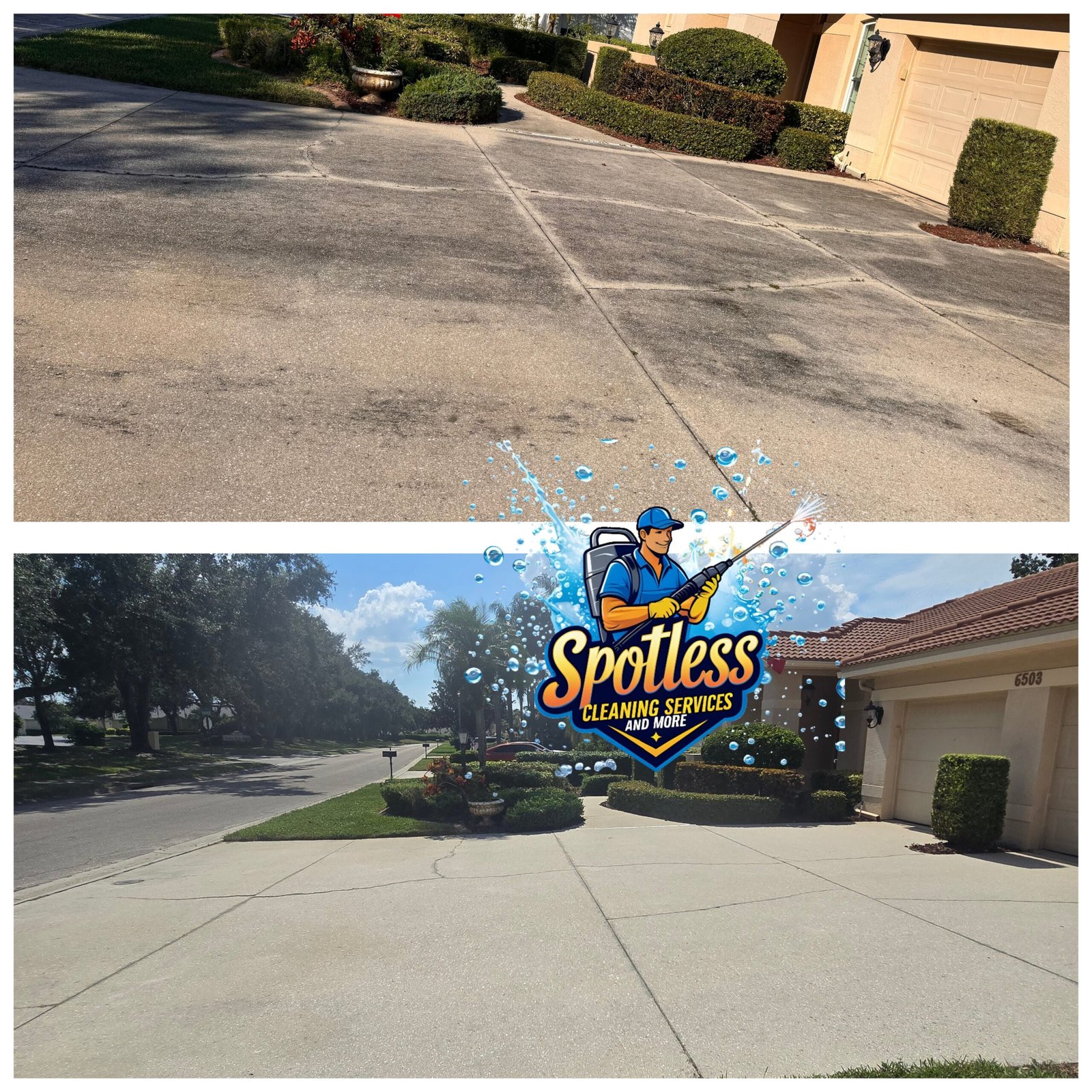
These project photos show the improvement possible on driveways, sidewalks and other concrete affected by algae, traffic film, tree debris, irrigation and years of Florida weather.


How Professional Concrete Cleaning Services Produce More Uniform Results
Professional results depend on the combination of treatment, water flow, equipment movement, edge work and rinsing—not simply the maximum pressure printed on a machine.
Surface Pretreatment
A suitable pretreatment begins breaking down organic growth, traffic film or grease before mechanical cleaning. Allowing the product time to work can reduce the amount of force required and improve consistency across heavily stained areas.
Different problems call for different products. An organic-growth treatment is not automatically the right answer for oil, rust, paint or mineral deposits. Using the wrong chemistry can waste time, create uneven color or affect nearby materials.
Commercial Surface Cleaning
A professional surface cleaner uses rotating spray bars inside a housing to cover concrete in controlled overlapping passes. On appropriate flatwork, this generally creates a more even appearance than cleaning the entire slab with a handheld wand.
Technique still matters. Moving too quickly can leave dirty areas behind, while moving too slowly or repeatedly stopping in one location can overclean the surface. Edges, corners, expansion joints and tight spaces often require separate detail work.
Rinsing and Drainage
Once contamination has been loosened, it must be moved away from the cleaned area. We consider slope, low spots, adjoining landscaping, garage doors, pool enclosures and pedestrian routes during rinsing. Poor rinsing can allow dirty water to dry back onto the slab.
Post-Treatment When Appropriate
A post-treatment may be used on compatible surfaces to address remaining organic growth and help the slab dry to a more uniform appearance. It is not a substitute for stain-specific treatment, and it does not permanently prevent future buildup.
Condition Assessment Matters
The American Concrete Institute’s surface-preparation guidance emphasizes evaluating existing conditions, contamination, moisture and previously applied protection systems before choosing a preparation method. That same principle supports our practical approach to cleaning: understand the slab first, then select the process. See the ACI guide summary for concrete surface assessment and preparation.
Our Concrete Cleaning Process
The cleaning sequence may change based on the surface and stains, but a professional job generally involves these six stages.
Inspect
Identify finish, age, cracks, coatings and stains.
Prepare
Clear the work zone and evaluate drainage.
Pretreat
Loosen organic growth or selected stains.
Surface Clean
Use overlapping passes for uniform coverage.
Detail & Rinse
Clean edges and flush loosened debris.
Post-Treat
Apply treatment when appropriate and review results.
Can Concrete Be Damaged During Cleaning?
Yes. Concrete is durable, but it is not impossible to damage. New, weak, decorative, coated or deteriorated concrete deserves extra caution.
Problems Caused by Poor Technique
- Permanent wand lines or “tiger stripes”
- Etching from excessive pressure or close distance
- Uneven cleaning caused by stopping in one spot
- Damage to weak edges or deteriorated areas
- Partial removal of paint, acrylic sealer or coatings
- Water forced beneath doors or into nearby fixtures
How Professionals Reduce Risk
- Evaluate age, finish and existing condition first
- Use pretreatment instead of relying only on force
- Match pressure, flow and nozzle to the surface
- Use a surface cleaner for consistent flatwork passes
- Test questionable coatings or decorative finishes
- Set realistic expectations for permanent stains
Cleaning Improves Concrete, but It Does Not Resurface the Slab
A clean slab can look dramatically brighter, yet professional cleaning cannot reverse every form of wear, chemical damage or permanent discoloration.
Acid, battery fluid, aggressive chemicals or previous pressure-washing damage can physically alter the surface. Cleaning may remove surrounding dirt but cannot rebuild missing cement paste.
Oil can travel below the visible surface. Treatment may lighten it considerably while a darker outline remains after the area dries.
Patches and replaced sections often differ in age, texture and color. Once dirt is removed, those differences can become more noticeable.
Failing sealer or paint may appear blotchy after cleaning because intact and deteriorated areas react differently.
What a Strong Result Looks Like
The goal of our Concrete Cleaning Services is to remove loose and treatable contamination, reduce widespread discoloration and create a cleaner, more uniform appearance while respecting the slab’s condition. On a healthy driveway or sidewalk covered mainly in algae and soil, the visual change can be substantial.
Where specialty stains are present, we discuss likely outcomes before work begins. Photographs help, but an in-person view may reveal coating failure, aggregate exposure, chemical burns or deep staining that is not obvious on a phone screen.
High-Traffic Concrete Requires a Maintenance Plan
Commercial and community concrete is judged every day by customers, tenants, residents and inspectors. Recurring Concrete Cleaning Services can keep entrances, walkways and service areas from reaching the point where heavy buildup becomes the first thing visitors notice.
Retail & Storefronts
Entrances and walkways that shape a customer’s first impression.
Restaurants
Sidewalks, service areas and exterior concrete affected by food and grease.
HOA Communities
Common sidewalks, amenity areas, mail stations and entrance zones.
Warehouses
Loading pads, aprons, exterior floors and traffic areas.
Gas Stations
High-traffic concrete with automotive and customer-related buildup.
Property Management
Recurring cleaning designed around occupancy and business schedules.
Scheduled Maintenance Instead of Emergency Cleaning
One-time cleaning is useful before an event, inspection, property listing or tenant turnover. However, high-traffic sites often benefit from a planned frequency based on shade, irrigation, foot traffic, food service, vehicle use and visibility. A shaded HOA sidewalk may develop algae more quickly than a sunny office entrance, while a restaurant service area may need attention for grease and spills.
A recurring plan can focus on priority areas first: main entrances, accessible routes, curb lines, dumpster approaches and places where water collects. The schedule can then be adjusted after seeing how quickly each site becomes stained.
Why Sarasota and Manatee County Concrete Gets Dirty So Quickly
Our climate combines moisture, sun, irrigation, vegetation and year-round outdoor use. Those conditions influence both how concrete stains and how frequently it needs attention.
Frequent Rain
Rain wets porous slabs, moves soil across driveways and leaves shaded concrete damp long enough for organic growth to establish.
Strong Sunlight
Sun can dry open areas quickly while covered and north-facing sections remain dark, creating uneven growth patterns across the same property.
Irrigation Overspray
Repeated sprinkler coverage adds moisture and may deposit iron or minerals, producing orange staining and recurring growth along edges.
Dense Landscaping
Palms, oaks and ornamental trees drop leaves, seeds, flowers, berries and tannin-rich debris onto walkways and pool areas.
Shade and Roof Runoff
Areas near walls, fences and roof drip lines often stay damp and accumulate a concentrated band of soil and organic material.
Vehicle Traffic
Tires, leaking fluids and road grime add contaminants that ordinary rainfall does not remove from residential driveways or parking areas.
Porous Surface Texture
Concrete’s pores and grooves hold fine particles below the level reached by sweeping or garden-hose rinsing.
Year-Round Outdoor Living
Patios, lanais and pool decks receive continuous foot traffic, furniture movement, food spills and moisture with little seasonal downtime.
What Affects the Price of Concrete Cleaning?
Accurate pricing depends on more than square footage. Two areas of the same size may require different preparation, treatments and time.
Total square footage, narrow walkways, obstacles and separate work zones affect setup and completion time.
Organic growth, oil, rust, gum and coatings require different products and processes.
Cracks, weak concrete, paint, sealer and decorative finishes may require a modified method.
Distance from equipment, drainage, parking and available water access can affect job logistics.
Why Photos Help With an Estimate
Wide photographs show the total area and access, while close-ups help identify oil, rust, tannins, paint, coating failure and heavy organic buildup. Include the property address because satellite imagery and site layout can help us understand the approximate size and configuration.
Bundling nearby areas—such as a driveway, front walk and pool deck—may be more efficient than scheduling each one separately. We will explain what is included so the estimate reflects the actual surfaces and treatments requested.
How Often Should Concrete Be Cleaned?
Many Southwest Florida homes benefit from concrete cleaning about once per year, but the ideal interval varies. A sunny driveway may stay cleaner longer than a shaded sidewalk beneath trees. Commercial entrances and restaurant walkways may need monthly, quarterly or semiannual service.
Cleaning before heavy growth becomes established is generally easier than waiting until the surface is uniformly black or slippery. Prompt treatment of oil, fertilizer and rust also improves the chance of a better cosmetic result.
Sealing may be worth considering after cleaning when the concrete or decorative surface is suitable. Sealer selection and surface preparation matter, so visit our paver and hardscape sealing services page for related options.
The right interval is based on conditions rather than a fixed calendar. Many sunny residential driveways look good with annual Concrete Cleaning Services, while deeply shaded sidewalks or irrigation-wet areas may need attention sooner. Commercial entrances can require quarterly or semiannual maintenance because appearance and pedestrian traffic are constant concerns.
Cleaning before algae forms a thick dark layer usually makes maintenance easier. It also gives you a chance to identify irrigation rust, oil leaks or drainage problems while they are still localized. Sweeping leaves, correcting sprinkler overspray and addressing vehicle leaks can extend the time between professional visits.
When a coating or sealer is planned, the surface must be evaluated and prepared according to the product requirements. The American Cement Association explains that stain-removal methods should be selected according to the type of stain, and that protective sealers or coatings may help repel aggressive substances. See its followed resource on caring for cement and concrete.
Learn More About Concrete Care and Surface Preparation
These followed external resources provide additional technical background from recognized concrete and environmental organizations.
Build a Stronger Property-Cleaning Plan
Concrete Cleaning Services often connect naturally with stain removal, driveway care, sidewalk maintenance, pool-deck cleaning and other exterior projects. These related pages help you choose the right service while strengthening the site’s topical organization.
Serving Sarasota and Manatee County Communities
We provide Concrete Cleaning Services throughout Sarasota and Manatee County, with local pages that help homeowners, businesses and community managers find information relevant to their area.
Frequently Asked Questions
What can professional concrete cleaning remove?
Professional cleaning can remove or significantly improve algae, mildew, dirt, traffic film, tire marks and many organic stains. Oil, rust, fertilizer, paint and coatings may require specialty treatment, and some permanent shadowing can remain.
Can pressure washing damage concrete?
Yes. Excessive pressure, incorrect nozzles, stopping in one position or cleaning weak concrete can cause etching and visible lines. Surface condition and age should be evaluated before work begins.
Can you completely remove oil stains?
Fresh oil usually responds better than old oil. Degreasers and hot or cold-water pressure cleaning may produce major improvement, but oil that has penetrated deeply can leave a residual shadow. Learn more on our oil stain removal page.
Why is my concrete turning black?
Black or dark concrete is often caused by embedded dirt, algae, mildew, moisture and shade. In some cases, discoloration may also involve tire residue, sealer wear or contaminants within the slab.
Can irrigation rust be removed from concrete?
Often, yes. Rust normally requires a specialty chemical process rather than pressure alone. Visit our rust removal services page.
Is new concrete safe to pressure wash?
New concrete should be allowed to cure adequately and may be more vulnerable to damage. The installer’s recommendations, surface condition and cleaning need should be considered before pressure cleaning.
Can sealed or painted concrete be cleaned?
Possibly, but coatings and sealers can be weakened or removed by excessive pressure or incompatible chemicals. A test area and modified cleaning method may be needed. Read our sealed-concrete guide.
How often should a driveway or sidewalk be cleaned?
Many residential properties benefit from annual cleaning. Shaded surfaces, HOA common areas and customer-facing commercial concrete may require more frequent service.
Does clean concrete stay cleaner after post-treatment?
A suitable post-treatment can address remaining organic growth and help produce a more even final appearance. How long the surface stays clean depends on shade, moisture, irrigation, trees and traffic.
Do you provide commercial concrete maintenance?
Yes. We clean storefront sidewalks, shopping plazas, restaurants, HOA common areas, warehouse pads, parking areas and other commercial flatwork. One-time and recurring schedules are available.
Can leaf and tannin stains be removed from concrete?
Leaf, acorn and tree-debris stains can often be substantially improved with an organic-stain treatment and professional concrete cleaning. Results depend on how long the tannins have been present, how porous the concrete is and whether the area remains shaded and wet.
How much does concrete cleaning cost?
Price depends on square footage, layout, access, condition, coatings and stain type. Contact us with the property address and photos for a more accurate estimate.
Do you provide concrete cleaning near me?
We serve Sarasota and Manatee Counties, including Bradenton, Sarasota, Lakewood Ranch, Parrish, Palmetto, Ellenton, Venice, Siesta Key and nearby communities. View our complete service area directory.
Are Concrete Cleaning Services different from general pressure washing?
Concrete cleaning is a specialized part of pressure washing that focuses on slab condition, finish, stain type and uniform flatwork results. It may include pretreatment, a professional surface cleaner, detail work, post-treatment and specialty stain services where appropriate.
Can you clean stamped, colored or decorative concrete?
Often, yes, but decorative concrete should be evaluated for sealer, color system, wear and previous coating repairs. Reduced pressure, a test area or a coating-specific method may be needed.
Why do tire marks sometimes return after the driveway dries?
Rubber and vehicle residue can transfer into porous concrete and may become more visible as moisture evaporates. Additional treatment can improve stubborn marks, but deeply transferred material may leave some shadowing.
Will concrete cleaning remove paint or old sealer?
Standard cleaning is not the same as coating removal. Loose material may lift unintentionally, while intact paint or sealer may require stripping, grinding or another specialized process. Tell us about existing coatings before service.
Can you clean concrete around a saltwater pool?
Yes, when the deck material and coating are compatible with the proposed method. Pool water, drains, furniture, screens and surrounding landscaping should all be considered during cleaning.
Schedule Professional Concrete Cleaning Services for Your Property
Send us the property address, approximate square footage and photos of the driveway, sidewalk, patio, pool deck or commercial concrete you want cleaned. Include close-ups of oil, rust, tannins, paint or unusual discoloration so we can recommend the correct service and provide a straightforward estimate.