Florida Exterior Cleaning Guide • Humidity • Moisture • Pressure Washing • Soft Washing
The Effects of Florida Humidity on Exterior Surfaces: What Homeowners & Businesses Need to Know
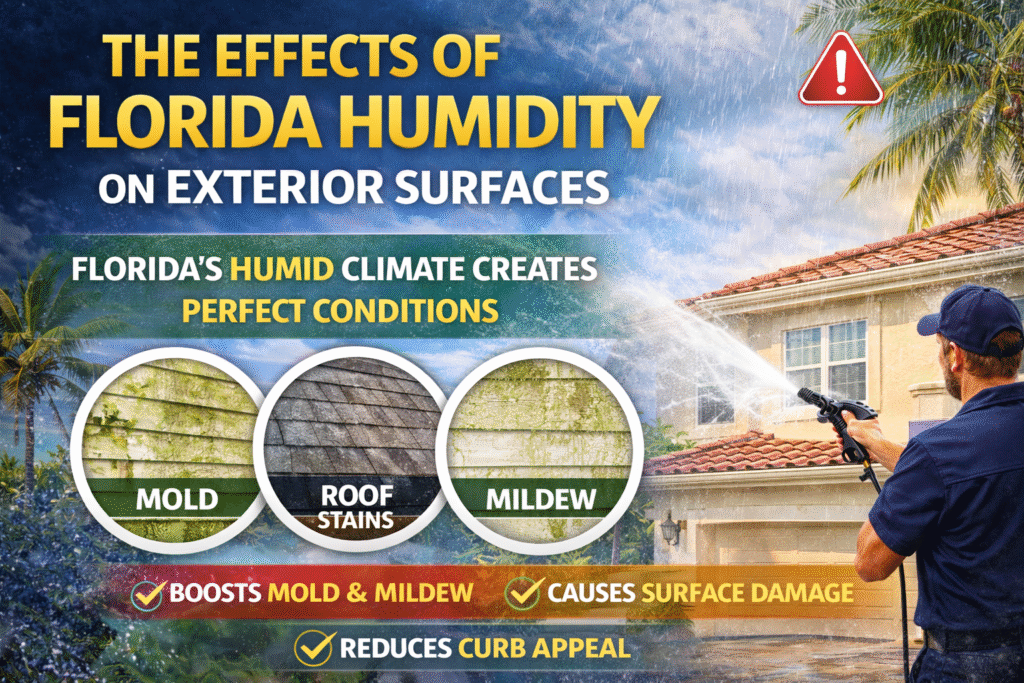
Florida humidity on exterior surfaces can influence how quickly roofs, stucco, siding, driveways, sidewalks, pavers, pool decks and commercial properties develop visible buildup. Humidity is only part of the story: rain, irrigation, shade, trees, soil, landscaping and coastal exposure all work together to create the conditions we see every day in Southwest Florida.
This guide explains how Florida’s humid climate affects common exterior materials, why some surfaces turn green or black faster than others, where pressure washing makes sense, where soft washing is the better approach, and how property owners can reduce recurring buildup without damaging the surfaces they are trying to maintain.
Florida Humidity & Exterior Surface Guide
Understanding Florida’s Climate
Why Humidity Is Such a Major Part of Florida Exterior Maintenance
Florida’s warm climate and surrounding bodies of water mean moisture in the atmosphere is a year-round reality, especially during warmer months.
The Florida Climate Center explains that relative humidity measures the amount of moisture in the air compared with the maximum amount the air can hold at a given temperature. It also notes that coastal areas tend to be somewhat more humid than inland parts of central Florida because of warm surrounding water and sea-breeze effects.
For property maintenance, the practical issue is not simply a humidity percentage on a weather app. It is how long surfaces remain damp. A shaded north-facing wall may stay moist far longer than a sunny driveway. A pool enclosure may experience repeated moisture every day. Irrigation can soak the same section of wall or sidewalk over and over. Trees and shrubs can block sunlight and airflow while adding organic debris.
That is why two homes only a few streets apart can soil at very different rates. One may have full sun and open airflow while the other is surrounded by mature landscaping, irrigation and shade.
External climate reference: Florida Climate Center — Humidity in Florida.
Humidity + Moisture + Organic Material
Why Florida Exterior Surfaces Develop Green, Black and Dark Buildup
The EPA describes moisture control as the key to mold control and explains that mold requires moisture to grow. CDC guidance similarly recommends controlling humidity and fixing moisture problems in homes.
Those federal resources primarily address indoor mold, so we do not use them to claim that every green or black exterior stain is a specific species of mold. Outdoors, color alone is not a reliable biological diagnosis.
What we can say is that exterior surfaces exposed to recurring moisture, shade and organic material frequently develop visible biological contamination. Florida gives those conditions plenty of opportunity to occur.
Shade
Less direct sunlight can mean slower drying. North-facing walls, areas beneath trees and narrow spaces between buildings may remain damp longer.
Irrigation
Sprinklers can repeatedly wet siding, stucco, fences, driveways and sidewalks. Mineral-rich water can also produce specialty stains that require separate treatment.
Landscaping
Leaves, pollen, berries, grass clippings, soil and mulch add organic material to exterior surfaces and can hold moisture against concrete and walls.
Rain
Florida rainfall repeatedly wets roofs, walls and flatwork. Low areas and poorly drained surfaces may take longer to dry.
Pool Areas
Pool decks and lanais are designed around water and frequently include shaded sections, landscaping and screens that create unique cleaning conditions.
Coastal Exposure
Properties closer to the Gulf may also encounter airborne salt and corrosion concerns in addition to ordinary humid-weather buildup.
External moisture references: U.S. EPA — A Brief Guide to Mold, Moisture and Your Home and CDC — About Mold.
Roofs
How Florida Humidity Affects Roof Appearance
Roof surfaces experience rain, dew, shade, airborne organic material and long periods of warm weather.
Dark streaks and visible biological staining can become noticeable over time, particularly on sections that stay shaded or damp. Trees may contribute leaf debris and reduce sunlight, while valleys and roof features can collect material.
Roof cleaning should not be approached the same way as driveway cleaning. We generally use roof-appropriate soft-washing methods rather than high-pressure mechanical cleaning for routine organic staining.
Cleaning improves appearance and removes compatible exterior contamination. It does not repair cracked tiles, damaged shingles, leaks, flashing problems or structural defects. Those conditions belong with a qualified roofing professional.
Learn more about our roof cleaning services and our guide to soft washing and roof cleaning.
Stucco, Siding & House Exteriors
Why Some Sides of a Florida House Turn Green Faster Than Others
Exterior walls rarely soil evenly.
The shaded side of a home can look dramatically different from a wall receiving strong afternoon sun. Irrigation may hit one corner. Shrubs may grow close to another. Soffits and trim can collect cobwebs and insect debris while stucco develops a broad film of environmental contamination.
For siding, stucco and painted exterior walls, we generally prefer a soft-washing approach rather than simply increasing pressure. Cleaning chemistry can loosen and treat contamination so it can be rinsed using a method appropriate for the surface.
Pressure alone can create unnecessary risk around paint, stucco cracks, siding joints, windows, doors and exterior fixtures. The objective is to clean the wall—not test how much force it can withstand.
Visit our house washing service or our Sarasota soft washing guide.
Driveways, Sidewalks & Concrete
Humidity Can Help Create the Conditions for Dark Concrete Buildup
Concrete is porous and textured. It receives soil, tire residue, irrigation, grass clippings, leaves and organic material. When portions remain damp or shaded, dark and green surface buildup can become especially visible.
That is why sidewalks beside turf and driveways beneath trees often look worse than exposed areas receiving full sun.
Professional concrete cleaning typically uses controlled mechanical cleaning and professional surface-cleaning equipment where appropriate. Cleaning chemistry and post-treatment can also be part of the process depending on the contamination.
But not every dark mark is humidity-related biological growth. Oil, rubber, paint and plant tannins can all create dark staining. Orange and reddish-brown marks may indicate rust or irrigation-related minerals.
Concrete Cleaning
For broad flatwork cleaning, see our concrete cleaning services.
Sidewalk Cleaning
Learn more about professional sidewalk cleaning and our guide to black sidewalk stains.
Driveway Cleaning
Visit our driveway cleaning service for compatible concrete and flatwork.
Pavers
Humidity, Moisture and Paver Maintenance in Florida
Paver driveways, walkways, patios and pool decks can develop organic buildup in joints and on the paver surface.
Shade, irrigation and landscape debris often contribute to darker joints or green-looking areas. But pavers require more consideration than ordinary poured concrete because joint material, existing sealer, previous treatments and paver type matter.
Before cleaning, inspect for loose pavers, failing sealer, weeds, drainage problems and specialty staining. Cleaning can improve appearance, but it does not repair settling or drainage problems.
See our paver cleaning services and paver sealing services.
Pool Decks, Patios & Lanais
Florida Outdoor Living Areas Live in a Constant Moisture Cycle
Pool areas combine water, foot traffic, shade, screens, landscaping and outdoor furniture. Those conditions can create visible buildup around drains, deck edges, screens and shaded corners.
A pool area may also contain several different materials in one space: painted or coated deck surfaces, pavers, bare concrete, aluminum frames, screens and metal furniture. One cleaning method should not automatically be applied to all of them.
Rust beneath furniture legs, grease near outdoor kitchens and organic buildup around pool edges each require different expectations.
Visit our pool deck cleaning service or our patio cleaning page.
Florida Humidity Winning the Battle Against Your Exterior?
Spotless Cleaning Services and More provides professional pressure washing and soft washing for compatible residential and commercial surfaces throughout Sarasota, Bradenton and surrounding Southwest Florida communities.
Commercial Properties
Florida Humidity Affects Businesses Too
Storefronts, restaurants, warehouses, plazas and other commercial properties face the same climate—plus customer traffic, delivery areas, food residue, gum, vehicle contamination and landscaping.
A commercial exterior may include concrete sidewalks, stucco walls, curbs, loading areas, roofs, signs, dumpster areas and customer entrances. These materials and contaminants do not all require the same process.
Routine exterior cleaning can be scheduled around traffic patterns and visible condition instead of waiting for heavy buildup to dominate the property’s appearance.
Storefronts & Plazas
Restaurants
Explore our restaurant exterior cleaning options.
Commercial Roofs
Visit our commercial roof cleaning services.
Use the Right Cleaning Method
Pressure Washing vs. Soft Washing in Florida’s Humid Climate
| Surface | Common Professional Approach | Reason |
|---|---|---|
| Concrete driveways & sidewalks | Controlled pressure / surface cleaning | Durable flatwork can often tolerate mechanical cleaning when properly performed. |
| Stucco & siding | Soft washing / lower pressure | Cleaning chemistry can handle contamination without unnecessary concentrated force. |
| Roofs | Roof-appropriate soft washing | Roofing should not be cleaned as though it were concrete. |
| Pavers | Surface-specific process | Sealer, joint material and paver condition must be considered. |
| Pool decks | Depends on material and coating | Plain concrete, pavers and coated decks require different approaches. |
For more detail, read our pressure washing vs. soft washing guide or visit our professional pressure washing services.
Reducing Fast Regrowth
You Cannot Eliminate Florida Humidity—But You Can Reduce Avoidable Moisture
Exterior cleaning cannot change Florida’s climate. It also cannot prevent spores, rain, pollen or organic debris from returning. What homeowners can do is reduce avoidable conditions that keep surfaces wet unnecessarily.
- Adjust sprinkler overspray
- Keep gutters and downspouts flowing
- Remove wet leaves and debris
- Trim dense vegetation away from walls
- Address standing water and drainage problems
- Keep mulch and soil from washing across concrete
- Inspect shaded surfaces more frequently
- Clean before buildup becomes extreme
Check irrigation
If a sprinkler head repeatedly sprays the wall or driveway, correct the direction when possible. In addition to unnecessary wetting, certain water sources may create mineral or rust staining.
Keep gutters clear
EPA homeowner guidance specifically recommends cleaning and repairing roof gutters regularly as part of moisture control. For exterior service, see our gutter cleaning page.
Manage landscaping
Dense shrubs directly against a wall can trap moisture, limit sunlight and make inspection difficult. Leaves and debris sitting on hardscape also hold water and add organic material.
Do not expect permanent results
A professionally cleaned exterior returns to the same Florida environment immediately after service. Future maintenance will eventually be necessary. We would rather set realistic expectations than promise a surface will never become dirty again.
Specialty Stains
Not Every Florida Exterior Stain Is Caused by Humidity
Rust & Irrigation
Orange or reddish-brown stains may require specialty rust removal.
Oil & Grease
Petroleum staining can penetrate porous concrete and may require oil stain treatment.
Paint & Coatings
Paint transfer and failing coatings are not ordinary organic buildup. Aggressive pressure can make these problems worse.
The practical lesson is simple: if the surrounding surface becomes clean but one stain remains, reconsider the stain type before applying more pressure.
Southwest Florida Service Area
Pressure Washing & Soft Washing in Sarasota, Bradenton and Surrounding Communities
Related Guides
Keep Learning About Florida Exterior Maintenance
Frequently Asked Questions
Florida Humidity on Exterior Surfaces FAQ
How does Florida humidity affect exterior surfaces?
Florida humidity can keep exterior surfaces damp longer and, combined with rain, shade, irrigation and organic debris, can contribute to recurring biological growth and visible exterior buildup.
Why do Florida houses turn green?
Green exterior buildup is often associated with moisture, shade and biological growth on siding, stucco and other surfaces. The exact organism should not be identified by color alone.
Does humidity cause black stains on concrete?
Humidity and moisture can contribute to conditions where organic buildup develops on concrete, but black stains can also come from tire marks, oil, plant tannins and other contaminants.
Why is one side of my house dirtier than the others?
Sun exposure, shade, irrigation, landscaping and airflow vary around the property. A shaded wall that stays damp longer can develop visible buildup faster than a wall receiving strong direct sun.
Should Florida homes be pressure washed or soft washed?
The method depends on the surface. Durable concrete may be cleaned with controlled pressure and surface-cleaning equipment, while siding, stucco, painted walls and roofs are commonly cleaned with lower-pressure soft-washing methods.
Can high humidity damage concrete?
Humidity itself should not automatically be blamed for structural concrete damage. Moisture can contribute to surface contamination, while cracking, settlement, corrosion, poor drainage and material deterioration involve different issues that may require repair rather than cleaning.
Why does my driveway turn black faster under trees?
Tree shade can slow drying while leaves and other organic material collect on the concrete. Those conditions can make shaded portions of a driveway soil more quickly.
Why do pool decks get dirty so quickly in Florida?
Pool decks are repeatedly exposed to water, shade, landscaping, foot traffic and organic material. The cleaning method should be selected according to the deck material and any coating present.
Can exterior cleaning prevent mold or algae forever?
No. Cleaning removes existing compatible contamination, but exterior surfaces remain exposed to moisture, spores, landscaping and weather. Future maintenance will eventually be needed.
How often should exterior surfaces be cleaned in Florida?
There is no universal schedule. Shade, irrigation, trees, traffic, surface material and coastal exposure all affect how quickly exterior buildup returns.
Does Florida humidity affect commercial buildings too?
Yes. Commercial walls, sidewalks, roofs, storefronts and other exterior surfaces experience the same climate conditions, often combined with heavier pedestrian and vehicle traffic.
Can you remove orange irrigation stains?
Many compatible rust and iron-related stains can be evaluated for specialty treatment. These stains are different from ordinary organic buildup and may need dedicated chemistry.
Do you provide exterior cleaning in Sarasota and Bradenton?
Yes. Spotless Cleaning Services and More provides professional exterior cleaning in Sarasota, Bradenton and numerous surrounding Southwest Florida communities.
Do you provide residential and commercial pressure washing?
Yes. We provide residential and commercial exterior cleaning, with the method selected according to the surface, contamination and project conditions.
How do I get a free exterior cleaning estimate?
Call Spotless Cleaning Services and More at 813-606-7589 or use our contact page.
Ready to Get Florida Humidity Buildup Off Your Property?
Whether the problem is a dirty house exterior, roof staining, dark concrete, pavers, pool decks or commercial flatwork, Spotless Cleaning Services and More can evaluate the surface and recommend an appropriate pressure-washing or soft-washing process.

No Comments