Will Pressure Washing Remove Concrete Sealer?
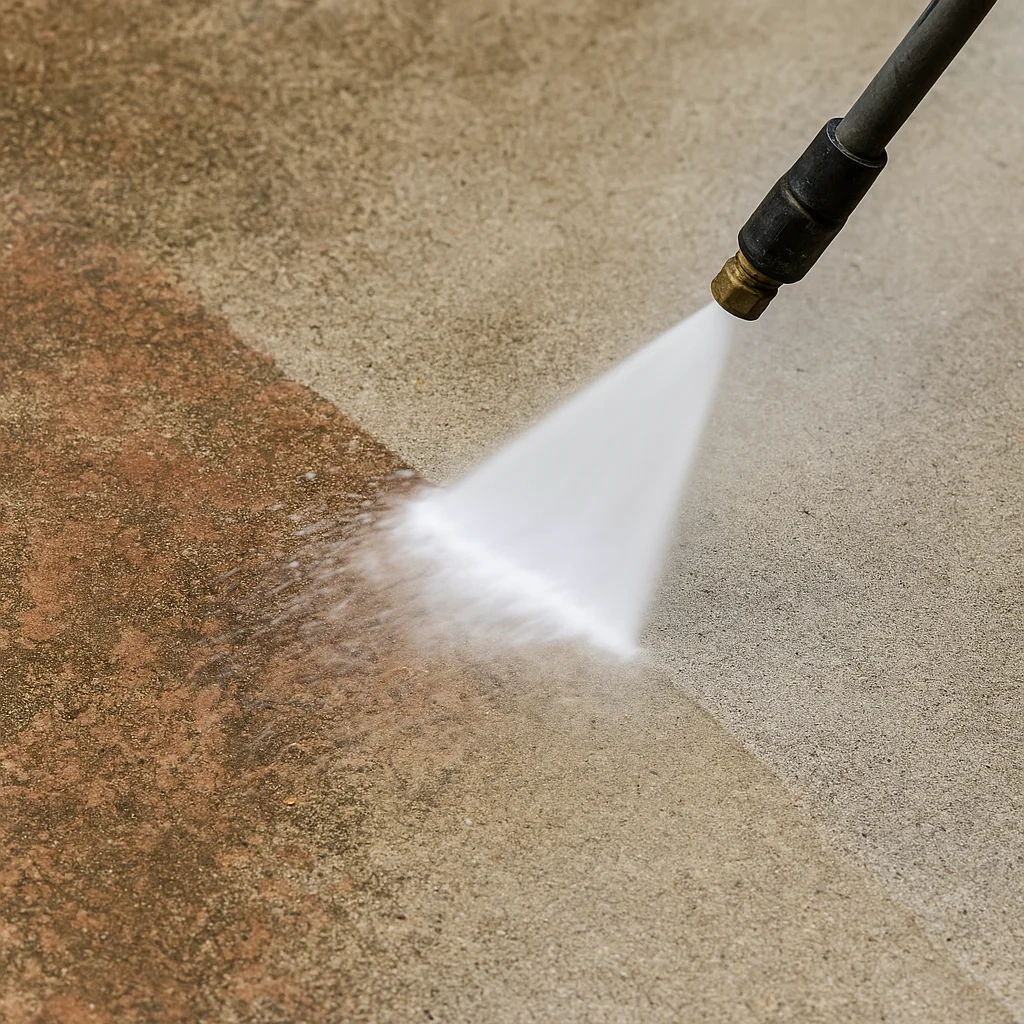
Yes, pressure washing can weaken or remove some concrete sealers—but whether it should be used for that purpose depends on the type of sealer, the condition of the coating and the surface underneath it.
Thin, aging or already-failing topical sealers may lift during aggressive cleaning. Other coatings may resist ordinary pressure washing while still becoming scarred, patchy or damaged. Penetrating sealers behave differently because they absorb into the concrete rather than forming the same type of film on top.
At Spotless Cleaning Services and More, we clean concrete, pavers and exterior hard surfaces throughout Sarasota and Manatee County and can help evaluate whether a surface needs cleaning, specialty stain treatment, sealer removal or preparation for resealing.
Quick Answer: Can a Pressure Washer Strip Concrete Sealer?
Sometimes. A pressure washer can remove loose or deteriorated topical sealer, especially when narrow spray patterns, close working distance or excessive pressure are used. But pressure washing is not a universal sealer-stripping method. Intact coatings may require chemical or mechanical removal, and increasing pressure too aggressively can damage the concrete itself.
Not All Concrete Sealers React the Same Way
The first thing to understand is that “concrete sealer” is not one single product.
Sealers can work very differently depending on their chemistry and whether they penetrate the concrete or form a visible coating on the surface.
Penetrating Sealers
Penetrating products absorb into concrete and react or reside below the immediate surface. They do not behave like a typical topical film, so pressure washing does not simply “peel them off” in the same way an old acrylic coating might fail.
Acrylic Sealers
Acrylic sealers generally form a relatively thin film on top of the concrete. Older, poorly bonded or failing acrylic coatings can be more vulnerable to aggressive pressure, abrasion and certain cleaning chemicals.
Polyurethane Coatings
Polyurethane coatings usually form a thicker, more durable film than many acrylic sealers. Intentional removal may require a more involved stripping or mechanical-preparation process.
Epoxy Coatings
Epoxy systems form substantial bonded coatings and typically require dedicated coating-removal methods when full removal is necessary. Ordinary pressure washing should not be assumed to completely strip an intact epoxy system.
How Pressure Washing Can Damage Concrete Sealer
Pressure washing sealed concrete is not automatically a problem. The risk depends on how the equipment is used and how well the coating is bonded.
The factors that can increase the risk of damaging or removing sealer include:
- Excessive pressure
- A narrow spray tip
- Holding the nozzle too close
- Repeated passes over one area
- A coating that is already peeling or delaminating
- Old or brittle sealer
- Aggressive cleaning chemicals
- Abrasion from surface-cleaning equipment
If your goal is to preserve an existing sealer, cleaning should be conservative. If your goal is to remove a failed coating completely, proper stripping is generally more predictable than simply escalating pressure.
How Can You Tell Whether the Sealer Has Failed?
A dirty sealed driveway and a failing sealed driveway are not the same problem.
If the surface is simply covered with dirt or organic buildup, cleaning may be all that is needed. If the coating itself has failed, washing the concrete cannot restore the failed film.
Visible pieces of coating lifting away from the surface often indicate loss of adhesion.
Whitening can be associated with moisture, excessive coating thickness, repeated layers, incompatible products or application conditions.
Uneven wear, inconsistent coating thickness or repeated recoating can leave glossy areas beside dull areas.
Bubbling can be associated with excess coating thickness, heat, trapped moisture, product chemistry or application conditions.
If the coating is visibly separating from the concrete or from an older coating beneath it, another coat generally will not repair the weak layer underneath.
Should Failed Concrete Sealer Be Removed Before Resealing?
Often, yes—especially when a topical sealer is peeling, delaminating, heavily clouded, incompatible or built up through repeated applications.
Putting new sealer directly over a failing layer can simply trap the existing problem beneath another coating.
PROSOCO advises removing old topical sealer before reapplication because remnants can interfere with the adhesion and performance of the new coating. Euclid Chemical also warns that excessive coating buildup can contribute to whitening, bubbling and peeling.
That does not mean every intact coating must always be completely removed. Some manufacturers allow compatible sealers to be recoated over properly prepared existing material.
The correct decision depends on:
- The existing sealer chemistry
- Whether the coating is still firmly bonded
- Whether the surface is cloudy, peeling or patchy
- How many coats are already present
- The chemistry of the new product
- The manufacturer’s preparation instructions
How Is Old Concrete Sealer Removed?
When full sealer removal is necessary, there are two broad approaches: chemical stripping and mechanical removal.
Chemical Stripping
A compatible stripper softens or breaks down the coating so it can be removed from the concrete. Product selection depends on the coating chemistry, thickness, decorative finish and surrounding conditions.
Mechanical Removal
Grinding, sanding, blasting and similar methods physically remove the coating. These approaches can be effective, but they may alter the concrete profile or decorative appearance if used too aggressively.
Pressure washing may sometimes be part of the cleanup after a coating has been loosened by an appropriate stripping process, but it should not be confused with a universal stand-alone method for removing every sealer.
Can Pressure Washing Prepare Concrete for Resealing?
Yes, pressure washing can be useful for removing dirt, organic buildup and loose material before resealing.
But cleaning alone does not guarantee that the surface is ready for a new sealer.
Proper preparation may also require:
- Removing failed or incompatible coating
- Cleaning the surface thoroughly
- Treating oil, rust or other specialty stains
- Allowing adequate drying
- Confirming product compatibility
- Following the new sealer manufacturer’s application rate
More sealer is not automatically better. Excessive film build can contribute to appearance and performance problems.
Can You Apply New Sealer Over Old Sealer?
Sometimes, but only when the existing material is sound, compatible and properly prepared.
Before recoating, you should know:
- What type of sealer is already present
- Whether the existing sealer is still firmly bonded
- Whether the old sealer is water- or solvent-based
- Whether the new product is chemically compatible
- Whether surface abrasion or another preparation step is required
- Whether the manufacturer allows recoating over existing material
If the existing sealer is unknown, a test area and careful product review may be appropriate before treating the entire surface.
What About Failed Paver Sealer?
Failed sealer on pavers can be especially noticeable because pavers contain texture, color variation and joint lines.
A cloudy or peeling coating may leave some areas glossy and others dull or white. If the underlying sealer has genuinely failed, applying another coat without correcting the problem can increase film buildup and make restoration more difficult later.
For broader restoration, see our
paver cleaning services
and
paver sealing services
.
Florida Humidity, Rain and Concrete Sealer
Sarasota and Manatee County properties experience high humidity, frequent rain, irrigation and periods when exterior surfaces can take longer to dry.
Those conditions do not automatically cause every sealer failure, but moisture, application timing and curing conditions matter.
Sealer problems can also be related to:
- Applying too much product
- Recoating too frequently
- Trapped moisture
- Incompatible products
- Poor surface preparation
- Applying outside the manufacturer’s recommended conditions
For more about Florida conditions, read our
guide to Florida humidity and exterior surfaces
.
Related Concrete and Paver Services
Paver Cleaning Services
Professional cleaning for paver driveways, patios and outdoor areas.
Paver Sealing Services
Sealing and maintenance options for appropriately prepared paver surfaces.
Driveway Cleaning
Professional cleaning for residential driveway surfaces.
Patio Cleaning
Cleaning for compatible outdoor patio surfaces and hardscape.
Pool Deck Cleaning
Cleaning for pool decks and other compatible outdoor surfaces.
Frequently Asked Questions
Will pressure washing remove concrete sealer?
It can weaken or remove some topical sealers, particularly if the coating is old, thin, poorly bonded or already failing. Penetrating sealers react differently because they do not form the same type of surface film.
Can a pressure washer damage sealed concrete?
Yes. Excessive pressure, narrow nozzles, close working distance and repeated passes can abrade a coating and may also etch or mark the concrete underneath.
Should failed concrete sealer be stripped before resealing?
Often, yes. When a topical sealer is peeling, delaminating, cloudy, incompatible or heavily built up, removing the failed coating can provide a cleaner starting point for a new compatible system.
Can I put new concrete sealer over old sealer?
Sometimes, but only when the existing material is sound, compatible and properly prepared according to the new product manufacturer’s requirements.
Why is my concrete sealer turning white?
Cloudiness or whitening can be associated with trapped moisture, excessive coating thickness, too many old layers, incompatibility or application conditions.
How is old concrete sealer removed?
Topical sealers are commonly removed chemically or mechanically depending on the coating chemistry, thickness, surface and decorative finish.
Can pressure washing prepare concrete for resealing?
Pressure washing can remove dirt, organic buildup and loose material, but intact or failed sealer may require additional stripping or surface preparation.
Should oil or rust stains be treated before sealing?
Visible specialty stains should generally be evaluated and treated before sealing whenever possible so they are not simply covered or locked beneath a new coating.
Does Florida humidity affect concrete resealing?
Weather and substrate moisture can affect application and curing. Follow the sealer manufacturer’s requirements for surface dryness, temperature, humidity and cure conditions.
Do you clean concrete and pavers before resealing?
Spotless Cleaning Services and More provides concrete cleaning, paver cleaning and paver sealing services throughout our service area. The exact scope depends on the existing surface and coating condition.
Learn More About Concrete Sealers and Sealer Removal
These external resources provide additional information about concrete sealer types, removal and common coating problems:

No Comments