
Oil Stain Removal Guide • Concrete • Driveways • Pavers
Can Pressure Washing Remove Oil Stains? What Actually Works on Concrete Driveways
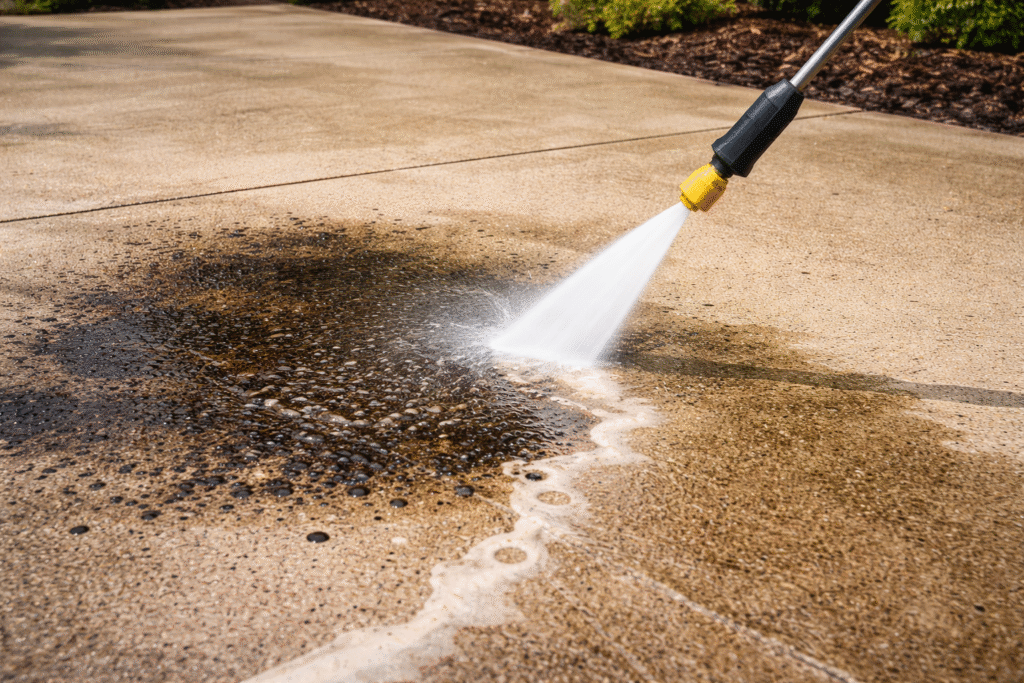
Can pressure washing remove oil stains? Yes, it can help—but pressure alone is rarely the entire solution. Motor oil, transmission fluid and other petroleum-based contamination can soak into porous concrete, so the best results usually come from absorption, the right degreaser, agitation or extraction, and controlled pressure washing.
Fresh spills are generally easier to improve than stains that have been soaking into a driveway for weeks, months or years. And because aggressive pressure can permanently mark concrete, turning up the PSI is not the answer when chemistry and stain treatment are what the job actually needs.
The Short Answer
Pressure Washing Helps Remove Oil—But the Cleaner Usually Does the Heavy Lifting
Think of pressure washing as one part of an oil-removal system rather than a magic eraser.
Oil and water do not readily mix. At the same time, unfinished concrete contains pores and small voids where petroleum can migrate below the visible surface. A pressure washer can remove surface grime and rinse away oil that has already been loosened, but water pressure may not reach or release contamination that has penetrated deeper into the slab.
That is why a professional approach typically starts by identifying the stain, removing excess material, applying a compatible cleaner, allowing appropriate dwell time, agitating or extracting when needed, and then cleaning the surrounding concrete evenly.
Independent reference: Concrete Network — How to Remove Oil Stains from Concrete.
Oil Stain Making Your Driveway Look Dirty?
Get a professional assessment before repeatedly blasting the same spot. We provide residential and commercial exterior cleaning throughout Sarasota and Manatee Counties.
Why Oil Sticks Around
Why Pressure Washing Alone Often Leaves a Dark Oil Shadow
Concrete Is Porous
Unsealed concrete can absorb liquid contamination. What looks like a surface spot may extend below the top layer.
Petroleum Repels Water
Plain water is not an efficient oil remover. A compatible degreaser helps loosen or emulsify petroleum contamination so it can be lifted and removed.
Old Stains Travel Deeper
The longer oil remains, the more opportunity it has to penetrate. Old staining can require multiple treatments or specialty extraction.
Heat Can Help
For suitable surfaces, professional hot-water equipment can improve grease and oil removal compared with relying on cold water alone.
Sealers Change the Job
Oil may be sitting on a sealer, trapped in a failing coating, or beneath it. The correct cleaning method depends on what is actually on the concrete.
Over-Cleaning Creates a New Problem
Trying to erase a stubborn spot with a concentrated nozzle can leave permanent etching or a conspicuously lighter area around the stain.
Timing Matters
Fresh Oil Spill vs. Old Set-In Oil Stain
Concrete Network recommends absorbing fresh oil and lists detergent, concrete cleaner/degreaser and poultice treatments among options for old oil stains. That supports a key point: the correct method depends on the stain rather than simply increasing water pressure.
A Better Process
How Oil Stains Are Removed From Concrete
Stop the Source
If a vehicle or piece of equipment is still leaking, fix or move the source first. Otherwise, the driveway can be re-stained immediately after cleaning.
Absorb Fresh Oil Before Washing
For a fresh spill, use an appropriate absorbent to collect as much free oil as possible before introducing water. Collect and dispose of contaminated absorbent according to applicable local requirements.
Inspect the Surface
Determine whether the surface is bare concrete, decorative concrete, sealed concrete, pavers or asphalt. Check for etching, cracks, coatings and previous repairs.
Apply the Correct Oil-Stain Cleaner
Petroleum-based staining commonly calls for a concrete-compatible alkaline degreaser or specialty oil treatment. Follow the product label for dilution, dwell time, PPE and surface compatibility.
Agitate or Extract When Appropriate
Mechanical agitation can help work cleaner into porous concrete. Once oil is loosened or emulsified, extraction with suitable equipment can be preferable to simply pushing contaminated water across the driveway.
Clean With Controlled Pressure
Use a suitable spray pattern or surface cleaner and keep the equipment moving. Pressure should rinse and clean the slab—not carve a brighter spot into it.
Evaluate After the Concrete Dries
Wet concrete can hide residual staining. Let the surface dry before deciding whether another treatment is worthwhile.
Pressure & Technique
What PSI Removes Oil Stains From Concrete?
There is no single PSI number that guarantees safe or complete oil stain removal.
The old version of this article listed fixed PSI ranges for concrete, garage floors, pavers and asphalt. Those numbers can create false confidence because the force reaching a surface also changes with nozzle angle, orifice size, flow rate, working distance, equipment configuration and dwell time.
More importantly, if the remaining discoloration is petroleum inside the concrete, additional pressure may damage the cement paste before it removes the stain.
For broader concrete safety information, read our guide to pressure washing and concrete damage and our explanation of PSI vs. GPM.
Pressure-washer safety reference: U.S. EPA — Household Hazardous Waste.
Professional Advantage
Hot Water vs. Cold Water for Oil Stain Removal
Hot-water pressure washing can be valuable on petroleum contamination. Concrete Network explains that hot water helps lift oil from concrete while an alkaline degreaser helps emulsify oil so it can be removed from the surface.
That is one reason commercial cleaning systems designed for greasy areas can outperform a homeowner repeatedly making high-pressure cold-water passes. The goal is to improve the cleaning chemistry and removal process rather than simply increasing impact force.
Hot water is not automatically appropriate for every coating, sealer or paving material. Surface identification still comes first.
Independent reference: Concrete Network — Concrete Cleaning Chemicals for Oil & Grease.
Surface Matters
Can Pressure Washing Remove Oil From Concrete, Pavers and Asphalt?
Concrete Driveways
Concrete is a common candidate for degreasing and controlled pressure washing. Porosity, age, finish and existing damage determine how aggressively it should be cleaned. See our driveway cleaning service.
Concrete Patios & Walkways
The same stain principles apply, but adjacent landscaping, drainage and decorative finishes may change the process. Explore concrete cleaning services.
Pavers
Paver material, sealer and joint sand all matter. Aggressive pressure can disturb joints. See our paver cleaning services.
Sealed Concrete
The stain may be on, within or below the coating. Read whether pressure washing can remove concrete sealer.
Garage Floors
Interior cleaning adds ventilation, slip, containment and wastewater concerns. Never run a gasoline-powered pressure washer in an enclosed garage.
Asphalt
Do not copy concrete settings onto asphalt. Petroleum and aggressive cleaning can affect asphalt binder, so the surface requires an asphalt-appropriate approach.
Oil Spot Making Your Driveway Look Neglected?
Stop experimenting with more pressure. Spotless Cleaning Services and More can evaluate the stain, surface and surrounding area and recommend an oil-removal process designed for the actual condition.
Don’t Just Move the Pollution
Oil-Stain Cleaning Requires Runoff Awareness
Cleaning a driveway does not make petroleum disappear. Once oil is loosened, the contaminated liquid or residue still needs to be managed appropriately.
The U.S. Environmental Protection Agency advises that motor oil should not be put into storm drains and strongly recommends against pouring household hazardous waste onto the ground or into storm sewers. Local requirements can be more specific, so check the rules that apply to the property and cleaning operation.
This is particularly important in Florida, where stormwater systems can connect streets and developed areas to canals, streams, bays and coastal waters.
Government references: U.S. EPA — Keep Pollution Out of Storm Drains and Florida DEP — Stormwater Management.
Avoid These Problems
7 Common Oil-Stain Removal Mistakes
1. Blasting Without Degreasing
Water pressure may spread or lighten surface contamination without addressing oil held inside porous concrete.
2. Using Maximum Pressure
A clean-looking white line around a dark stain can be concrete etching, not successful stain removal.
3. Using the Wrong Chemical
Different stains need different chemistry. Follow a product specifically labeled for the contamination and surface.
4. Letting Cleaner Dry
Many cleaners require controlled dwell time and should not be allowed to dry. Follow the manufacturer’s label exactly.
5. Cleaning Only a Tiny Spot
Spot treatment can leave a visibly cleaner halo. Sometimes a larger section or the whole concrete panel needs even cleaning.
6. Ignoring the Storm Drain
Moving oil off your driveway and into drainage is not responsible removal.
7. Promising 100% Removal
Deep oil can permanently discolor porous material. Set expectations based on the stain’s age and depth.
When DIY Stops Making Sense
When to Call a Professional for Driveway Oil Stain Removal
Professional treatment is worth considering when the stain is old, covers a large area, has resisted consumer degreasers, is on decorative or sealed concrete, sits close to a storm drain, or is part of a larger driveway-cleaning project.
Spotless Cleaning Services and More provides oil stain removal, concrete cleaning and driveway cleaning throughout Sarasota, Bradenton and surrounding Southwest Florida service areas.
For commercial properties where vehicle fluids and heavy traffic are common, we also provide gas station cleaning services and other commercial exterior cleaning services.
Keep It From Coming Back
How to Prevent Future Oil Stains on Concrete
Repair Vehicle Leaks
Cleaning the driveway without fixing the leaking vehicle only resets the clock.
Absorb Spills Quickly
The sooner free oil is contained and collected, the less time it has to penetrate porous concrete.
Consider a Compatible Sealer
A suitable sealer may help reduce absorption and simplify future maintenance, but the concrete must be properly prepared before sealing.
Oil contamination should be removed before staining, coating or resealing concrete because remaining petroleum can interfere with decorative treatments. If you are planning a coating or sealer, make stain removal part of the preparation—not an afterthought.
Related Guides & Services
More Help for Driveways and Concrete
Frequently Asked Questions
Can Pressure Washing Remove Oil Stains? FAQ
Can pressure washing remove oil stains from concrete?
Yes, pressure washing can help, especially after the oil has been absorbed and treated with an appropriate degreaser. Old or deep stains may require repeated treatment or specialty extraction.
Will pressure washing alone remove motor oil from a driveway?
Often not completely. Concrete is porous, so petroleum can remain below the surface. Pressure washing is usually more effective after proper stain treatment.
Is it better to clean an oil stain while it is fresh?
Yes. Containing and absorbing fresh oil quickly can limit how much penetrates the concrete.
What cleaner works on oil stains in concrete?
Concrete-specific alkaline degreasers are commonly used for petroleum-based oil and grease. Always follow the product label and verify surface compatibility.
Can old oil stains be removed from concrete?
They can often be substantially improved, but old stains may need repeated degreasing, extraction, a poultice or other specialty treatment. Complete removal is not always possible.
Does hot water help remove oil from concrete?
Yes, professional hot-water cleaning can improve removal because heat helps lift oily contamination while appropriate degreasers help emulsify it.
Can too much pressure damage concrete while removing oil?
Yes. Concentrated pressure, narrow nozzles and working too close can etch concrete. More PSI is not a substitute for proper stain chemistry.
Can I wash oily water into a storm drain?
Do not intentionally direct oily waste into a storm drain. EPA guidance warns against putting motor oil and household hazardous waste into storm sewers. Follow applicable local requirements.
Can pressure washing remove oil stains from pavers?
It can be part of the process, but paver material, sealer and joint sand must be considered before aggressive cleaning.
Can pressure washing remove oil stains from asphalt?
Asphalt should not be treated like concrete. Petroleum contamination and aggressive cleaning can affect asphalt, so use an asphalt-appropriate method.
Should I seal concrete after removing oil stains?
A compatible sealer may help reduce future absorption, but oil must be properly removed and the surface prepared before sealing.
Why can I still see the oil stain after cleaning?
Petroleum may have penetrated below the surface. Wet concrete can also temporarily hide or change the appearance of residual staining, so evaluate the slab after it dries.
Do you provide oil stain removal in Sarasota and Bradenton?
Yes. Spotless Cleaning Services and More provides oil stain removal and concrete cleaning throughout Sarasota, Bradenton and surrounding Southwest Florida communities.
How do I get an oil stain removal estimate?
Ready to Get That Oil Stain Off Your Driveway?
Get a professional assessment instead of repeatedly blasting the same spot. We can combine stain treatment with driveway or concrete cleaning to improve the entire surface—not just create a clean halo around one stain.

No Comments