
PLANT PROTECTION • SOFT WASHING • SARASOTA & MANATEE COUNTIES
Will Pressure Washing with Bleach Kill Plants? 5 Ways Professionals Protect Landscaping
Will pressure washing with bleach kill plants? Yes, sodium hypochlorite can injure landscaping when leaves, flowers, roots, or soil receive enough exposure. That is why professional exterior cleaning should include a plant-protection plan before bleach-based cleaning solution is applied.
The goal is not to pretend bleach is harmless. The professional approach is to reduce exposure through controlled application, fresh water, careful rinsing, runoff awareness, and additional protection around sensitive landscaping.
At Spotless Cleaning Services and More, we provide residential and commercial pressure washing and soft washing throughout Sarasota and Manatee Counties while treating landscaping protection as part of the cleaning process.
Quick Answer
Will pressure washing with bleach kill plants? It can. Sodium hypochlorite is capable of damaging plant tissue when exposure is strong enough or lasts long enough. Professionals reduce the risk by inspecting landscaping first, controlling overspray, pre-wetting where appropriate, rinsing plants with fresh water, and monitoring runoff throughout the cleaning project.
Bleach & Landscaping Protection Guide
2. Why Professionals Use Sodium Hypochlorite
3. How Bleach Can Damage Landscaping
4. Five Plant-Protection Steps
THE SCIENTIFICALLY HONEST ANSWER
Yes, Sodium Hypochlorite Can Harm Plants
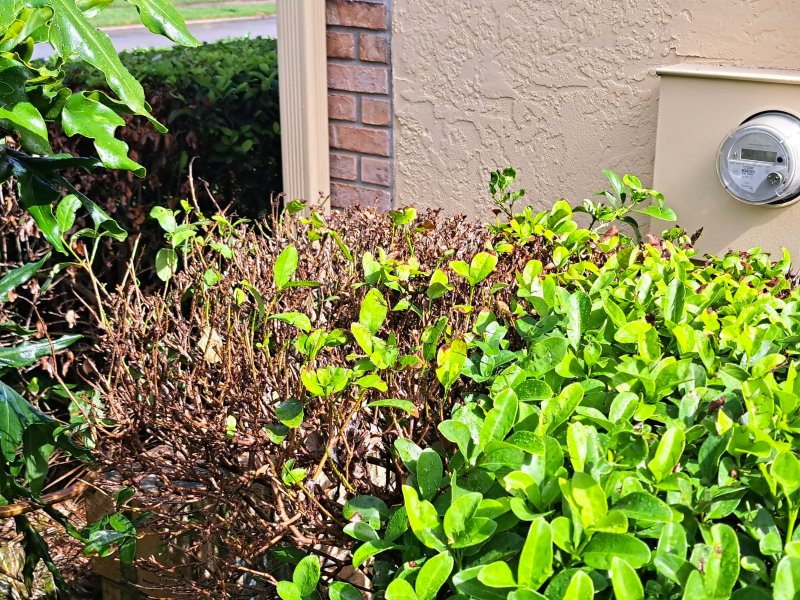
Bleach is not harmless to landscaping. Sodium hypochlorite can be phytotoxic, meaning that sufficient exposure can injure plant tissue.
University of California Integrated Pest Management guidance specifically recommends thoroughly rinsing sodium-hypochlorite-treated materials with clean water to avoid phytotoxicity.
University of Minnesota Extension also cautions against pouring bleach into gardens because it can harm plants and beneficial soil organisms.
Our Position
A professional cleaner should never promise that a chemical capable of injuring plants somehow becomes incapable of doing so simply because a professional is applying it. The responsible goal is to minimize landscaping exposure while still cleaning the property effectively.
University of California IPM: Sodium Hypochlorite & Phytotoxicity
WHY EXTERIOR CLEANERS USE IT
Why Is Bleach Used in Professional Pressure Washing and Soft Washing?
Sodium hypochlorite is the active ingredient in many bleach products and is effective against numerous forms of biological contamination.
That matters in Florida because roofs, siding, stucco, concrete, pool areas, fences, and commercial buildings are frequently exposed to humidity, rainfall, shade, vegetation, and irrigation.
On many surfaces, using an appropriate cleaning solution allows the technician to rely on less mechanical pressure.
House Washing
Chemistry can address organic buildup on compatible siding, stucco, soffits, fascia, and painted surfaces without treating the wall like concrete.
Roof Cleaning
Roof-appropriate soft washing relies on chemistry rather than aggressive high-pressure cleaning for common organic discoloration.
Concrete & Flatwork
Sodium hypochlorite may sometimes be incorporated into pretreatment or post-treatment depending on contamination and surface conditions.
Read our complete guide:
Why Sodium Hypochlorite Is Used in Pressure Washing
.
HOW EXPOSURE HAPPENS
How Pressure Washing with Bleach Can Damage Plants
Plant injury is influenced by more than the concentration of the cleaning solution.
Exposure depends on the plant species, health of the plant, contact time, amount of solution, weather, direct spray, runoff, repeated dripping, and how quickly the plant is rinsed.
Cleaning solution drifting directly onto foliage creates an obvious route of exposure.
Wash water flowing repeatedly into planting beds can expose roots and soil.
Roof edges and gutters can concentrate runoff into a small area.
Some species and already-stressed plants may be more sensitive than others.
Plants already stressed by Florida heat may have less tolerance for additional chemical exposure.
Multiple concentrated exposures are different from a brief diluted contact followed by rinsing.
OUR PLANT-PROTECTION PROCESS
5 Ways Professionals Reduce the Risk of Bleach Damage to Plants
1
Inspect Landscaping Before Cleaning
We look at shrubs, flowers, trees, potted plants, garden beds, irrigation, roof runoff points, gutters, downspouts, and low areas where solution may collect.
2
Pre-Wet When Appropriate
Fresh water can wet foliage and surrounding soil before nearby cleaning-solution application. Pre-wetting is a risk-reduction measure, not a guarantee, so application control remains important.
3
Control the Application
Cleaning solution should be directed toward the building surface—not sprayed indiscriminately across landscaping. Wind and overspray need to be considered throughout the project.
4
Rinse with Fresh Water
Fresh-water rinsing helps remove residual cleaning solution from foliage and surrounding surfaces. University of California IPM specifically recommends rinsing sodium hypochlorite from treated materials to avoid phytotoxicity.
5
Monitor Runoff Throughout the Job
We continue watching gutters, roof edges, drip lines, low areas, curbs, planting beds, and other runoff paths as the project progresses.
What About Bleach Neutralizers?
Specialized products may be useful in some professional workflows, but they should not replace the fundamentals of controlled application and thorough fresh-water rinsing. We do not claim that a neutralizer automatically makes any amount of bleach exposure harmless.
HAVE EXPENSIVE OR SENSITIVE LANDSCAPING?
Tell Us Before We Clean
Send us photos of gardens, palms, flowering plants, potted plants, or landscaping close to the house. We can consider those areas when planning the exterior-cleaning process.
Some Landscaping Requires Extra Attention
Florida properties can contain palms, tropical plants, flowering ornamentals, shrubs, vegetable gardens, vines, newly installed landscaping, and valuable potted plants.
Those situations should not all receive exactly the same preparation.
If a movable potted plant is sitting against the wall, moving it is often easier than attempting to clean around it. If dense landscaping sits beneath an entire roof slope, the cleaning sequence and runoff plan deserve more attention.
WHERE DOES THE WATER GO?
Plant Protection and Stormwater Protection Go Together
What happens to cleaning solution after it leaves a wall, driveway, or roof matters.
Florida DEP explains that stormwater flowing over paved streets, parking lots, rooftops, and other surfaces can pick up chemicals and other pollutants before reaching rivers, lakes, and estuaries.
For an exterior-cleaning project, that means identifying slopes, drains, gutters, curbs, low areas, and other runoff pathways before and during cleaning.
Professional Habit
Know where the water will travel before the first cleaning solution is applied. A clean exterior is not a successful job if contaminated wash water is simply sent somewhere it should not go.
Florida Department of Environmental Protection: NPDES Stormwater Program
Why Landscaping Protection Matters During House Washing
House washing commonly places the cleaning zone directly beside shrubs, flowers, turf, garden beds, and foundation plants.
That is why landscaping protection has to be integrated into the process from the beginning.
When cleaning compatible siding, stucco, soffits, fascia, and exterior walls, the objective is to apply cleaning solution to the building—not the garden.
Explore our
professional house washing service
and
Sarasota soft washing service
.
Roof Cleaning Creates Special Landscaping Challenges
Roof cleaning can place landscaping directly below the areas where cleaning solution drains or drips.
Gutters, valleys, roof edges, and downspouts can concentrate runoff in ways that are not always obvious before the project starts.
Where a downspout discharges into a planting bed, that pathway needs to be understood before cleaning solution is applied to the roof.
Roof Cleaning Is Not Just a Roof Problem
A proper roof-cleaning plan considers what sits underneath the roof, where the gutters drain, and which plants are located in those runoff zones.
Learn about our
roof cleaning services
.
Why DIY Bleach Cleaning Can Create More Landscaping Risk
Online exterior-cleaning recipes often focus almost entirely on one number—the percentage of bleach in a mixture.
But concentration is only one part of plant exposure.
The total amount applied, overspray, wind, contact time, surface height, runoff direction, plant condition, and rinsing all matter.
Never Mix Bleach with Acids or Ammonia
Dangerous gases can be produced when incompatible chemicals are mixed. Use cleaning products only according to their labels and safety instructions.
If you are cleaning a small area yourself, keep fresh water available, avoid spraying vegetation, work in controlled sections, and rinse accidental exposure promptly.
Read our
Dangers of DIY Pressure Washing
guide for additional equipment and property risks.
Landscaping Protection Matters on Commercial Properties Too
Commercial properties often combine large landscaped areas with sidewalks, storm drains, parking areas, entrances, customer traffic, and commercial building surfaces.
The same principles apply: inspect first, identify sensitive areas, control application, rinse where appropriate, and understand where wash water will travel.
Commercial storefront cleaning
Restaurant exterior cleaning
Commercial roof cleaning
Related Pressure Washing & Soft Washing Guides
FREQUENTLY ASKED QUESTIONS
Will Pressure Washing with Bleach Kill Plants? FAQ
Will pressure washing with bleach kill plants?
Sodium hypochlorite can injure plants if foliage or roots receive enough exposure. Professional cleaning reduces risk through controlled application, fresh-water rinsing, pre-wetting or shielding when appropriate, and runoff management.
Can bleach burn plant leaves?
Yes. Sodium hypochlorite can be phytotoxic and may cause spotting, browning, wilting, or scorched-looking foliage when exposure is sufficient.
Does watering plants before soft washing help?
Pre-wetting can be one useful risk-reduction step because foliage and soil are already wet with fresh water. It should still be combined with controlled chemical application and post-rinsing.
Should plants be rinsed after pressure washing with bleach?
Yes. Fresh-water rinsing helps remove residual cleaning solution from foliage and nearby surfaces.
Are some plants more sensitive to bleach?
Yes. Species, age, overall health, environmental stress, concentration, and exposure time can all affect how a plant responds.
Does bleach have to directly touch a plant to cause damage?
No. Direct spray is one route of exposure, but runoff into soil and repeated dripping around roots can also matter.
Do bleach neutralizers protect plants?
Specialized products may be useful in certain professional workflows, but they should not replace proper application control and thorough fresh-water rinsing.
Is bleach used for house washing?
Sodium hypochlorite is commonly used in professional soft-washing systems to address organic contamination. Solution strength and application should be matched to the surface and project.
Is bleach used for roof cleaning?
Sodium-hypochlorite-based solutions are commonly used as part of professional roof soft washing. Landscaping protection is especially important because roof edges, gutters, and downspouts can concentrate runoff.
Can bleach runoff go into a storm drain?
Chemical wash water should be managed carefully and according to applicable local and state requirements. Stormwater systems can carry pollutants into nearby water bodies.
Should I move potted plants before house washing?
If practical, moving small potted plants away from the immediate cleaning area is a simple way to reduce unnecessary exposure.
What if my landscaping is already stressed?
Tell the cleaning company before the project begins. Newly installed, drought-stressed, unhealthy, or especially valuable landscaping may require additional precautions.
How do I get a pressure-washing or soft-washing estimate?
Call or text Spotless Cleaning Services and More at
(813) 606-7589
or
request a free estimate online.
SPOTLESS CLEANING SERVICES AND MORE
Clean Exterior. Protected Landscaping. Better Planning.
If your home or commercial property needs pressure washing or soft washing and you are concerned about landscaping, tell us before the job so the cleaning plan can account for the property.

No Comments