Will Pressure Washing Damage Concrete?
Will pressure washing damage concrete? Yes, it can—especially when excessive pressure, the wrong nozzle, poor technique, or very close spray distance is used. But pressure washing can also be an effective way to clean sound concrete when the equipment and cleaning method are matched to the surface. Sarasota property owners can see how we approach this service on our professional concrete cleaning in Sarasota page.
At Spotless Cleaning Services and More, we provide residential and commercial pressure washing and concrete cleaning throughout Sarasota and Manatee Counties. Our goal is simple: remove the buildup without unnecessarily damaging the surface underneath.
Pressure washing can etch, pit, streak, or expose aggregate when the cleaning force is too aggressive for the concrete. Age, condition, finish, nozzle, distance, water flow, and operator technique all matter—so there is no single PSI number that is automatically safe for every slab.
Concerned About Damaging Your Driveway or Patio?
Let Spotless Cleaning Services and More evaluate the surface and choose an appropriate cleaning approach for your concrete.
Call (813) 606-7589
Text for a Free Estimate
Get Free Estimate Online
How Can Pressure Washing Damage Concrete?
Concrete looks extremely hard, but its finished surface can still be altered by a concentrated high-pressure stream. Damage can occur when the spray removes or erodes part of the surface paste, cuts visible cleaning lines, or attacks weak and deteriorated areas.
The risk is not controlled by PSI alone. A narrow spray pattern held close to the slab concentrates force into a much smaller area than a wider fan used at an appropriate distance. Moving too slowly or repeatedly cleaning the same spot can also create uneven results.
Concrete Network advises keeping the nozzle about 12 inches from concrete and using a steady sweeping motion, while also noting that older, stamped, or stained concrete can respond differently and should be tested in a less-visible area first. Read Concrete Network’s concrete pressure-washing guidance.
7 Signs of Pressure Washing Concrete Damage
Visible lines or carved-looking areas where the surface was cleaned too aggressively.
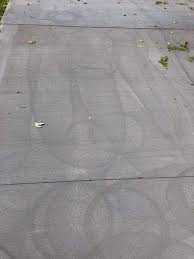
Uneven circular or overlapping patterns left by inconsistent technique or equipment.
Stone becomes more visible because surface material has been removed.
Small depressions or rough spots appear in weakened or overworked areas.
Aggressive cleaning can make sections look lighter or different from adjacent concrete.
Improper cleaning may dull, weaken, or remove some surface coatings.
Existing deterioration can become more obvious when loose material is disturbed.
If your concrete is already showing discoloration or black organic buildup, see our guide to black stains on sidewalks before assuming more pressure is the answer.
What PSI Is Safe for Pressure Washing Concrete?
This is where many online guides oversimplify the subject. There is no universal PSI setting that is safe for every concrete surface. A sound driveway, older slab, decorative finish, sealed patio, and newly placed concrete should not automatically be treated the same way.
Use only the cleaning force appropriate for the particular surface and contamination. Nozzle type, spray distance, GPM, dwell time, cleaning chemistry, age, finish, and concrete condition can matter as much as the machine’s pressure rating.
Concrete Network says pressure washing older concrete is generally safe when moderate pressure—typically under 3,000 PSI—is combined with sufficient nozzle distance and steady movement. Its guidance for routine concrete cleaning also warns that excessive pressure can cause etching or surface damage. See its guidance for cleaning older concrete.
For a deeper explanation of pressure and flow, read our guide to PSI vs. GPM and our article on driveway pressure-washing PSI.
New Concrete, Old Concrete, Decorative Concrete & Sealed Surfaces
New Concrete
Fresh concrete should not be treated like a mature driveway. Concrete Network notes that concrete typically takes about 28 days to fully cure and reach maximum strength. Follow the installer or concrete professional’s care instructions before using aggressive cleaning equipment on a new slab.
Older or Deteriorated Concrete
Older concrete may already contain cracks, weak surface material, previous repairs, or spalling. Pressure washing can reveal those defects and may remove material that is already loose. Inspection should come before aggressive cleaning.
Stamped, Colored & Decorative Concrete
Decorative surfaces require additional caution because damage can affect not only texture but also color and appearance. A test area and knowledge of the existing coating or finish are especially important.
Sealed Concrete
Pressure washing can affect some sealers when the cleaning method is too aggressive. If the surface has a coating, determine what is on the concrete and its condition before cleaning. If you’re considering resealing, see our paver sealing services and our guide on whether pressure washing can remove concrete sealer.
Concrete Cleaning Without the Guesswork
Driveways, patios, sidewalks, pool decks, and commercial concrete can all have different conditions. We inspect the surface first and match the cleaning process to the job.
How Professionals Reduce the Risk of Concrete Damage
Inspect the Surface
Look for cracks, coatings, repairs, weak areas, age, and previous damage.
Identify the Contamination
Algae, dirt, rust, oil, paint, and mineral staining do not all require the same treatment.
Choose the Cleaning Method
Select suitable equipment, cleaners, nozzle pattern, distance, and pressure for the surface.
Clean Consistently
Maintain controlled movement and overlap to reduce streaks and uneven cleaning.
Rinse & Inspect
Check the cleaned surface before deciding whether additional treatment is appropriate.
Protect Adjacent Areas
Consider landscaping, walls, doors, drains, painted surfaces, and runoff before work begins.
For homeowners comparing DIY and professional cleaning, see professional pressure washing vs. DIY and our guide on the dangers of DIY pressure washing.
When More Pressure Isn’t the Answer
Some stains respond better to the correct cleaning product and process than to simply increasing pressure. Concrete Network notes that different contaminants may require different cleaning chemicals—for example, degreasers for oil and grease and appropriate products for rust or organic stains. See its concrete cleaning chemical guide.
May require an appropriate degreasing process rather than simply more pressure. Oil stain removal
Rust staining often requires surface-specific chemistry. Rust removal services
Cleaning chemistry can help loosen organic contamination so the surface does not have to be attacked with unnecessary pressure.
Removing coatings can be a surface-preparation project rather than routine cleaning. Can pressure washing remove paint?
Don’t judge a pressure washer only by its maximum PSI rating. Cleaning performance and risk also depend on water flow, nozzle selection, distance, technique, surface condition, and the type of contamination being removed.
Concrete Surfaces We Clean
Spotless Cleaning Services and More serves residential and commercial properties with exterior concrete cleaning throughout Sarasota and Manatee Counties.
- Driveway cleaning
- Sidewalk cleaning
- Patio cleaning
- Pool deck cleaning
- Residential concrete cleaning
- Professional concrete cleaning services
Concrete Cleaning in Sarasota & Manatee Counties
Florida’s warm, humid environment can contribute to recurring exterior buildup, so concrete maintenance is a common need for local homes and businesses. We serve Sarasota, Bradenton, Palmetto, Parrish, Ellenton, Lakewood Ranch, Siesta Key, Venice, and surrounding communities.
Explore our Sarasota County service area and Manatee County service area.
Frequently Asked Questions
Will pressure washing damage concrete?
It can. Excessive cleaning force, close nozzle distance, narrow spray patterns, poor technique, or deteriorated concrete can result in etching, pitting, streaking, or other surface changes.
Can 3,000 PSI damage concrete?
A machine’s PSI rating by itself does not determine whether concrete will be damaged. Surface condition, nozzle, distance, flow, and technique all matter. Some industry guidance uses approximately 3,000 PSI for concrete cleaning, while also warning against getting too close or using improper technique.
Can pressure washing remove concrete sealer?
Aggressive cleaning may affect some coatings or sealers, but results depend on the product, condition, and cleaning method. Identify the coating before attempting removal or cleaning.
Can you pressure wash new concrete?
New concrete continues gaining strength after placement. Follow the installer or concrete professional’s curing and maintenance instructions before using high-pressure cleaning equipment.
Why does my concrete have lines after pressure washing?
Visible lines can result from inconsistent distance, excessive cleaning force, uneven overlap, or lingering too long in one area. In some cases, the surface itself may have been etched.
Should I hire a professional to pressure wash my driveway?
If you’re unsure about the age, condition, coating, equipment, or correct technique, professional cleaning can reduce guesswork. Read our guide on whether professional driveway pressure washing is worth it.
Protect Your Concrete. Get a Free Estimate.
Professional residential and commercial pressure washing for driveways, sidewalks, patios, pool decks, and other exterior surfaces across Sarasota and Manatee Counties.
Call (813) 606-7589
Text for Free Estimate
Request Estimate Online
Spotless Cleaning Services and More
Call or text: (813) 606-7589
Website: spotlesscleaningservicesandmore.com

No Comments