
How to Pressure Wash My Driveway (Step-by-Step Guide for a Cleaner, Brighter Driveway)
How to pressure wash my driveway is one of the most common questions homeowners ask when their concrete starts turning dark, stained, or slippery. Over time, driveways collect dirt, tire marks, algae, mold, mildew, oil drips, and rust stains. The good news is that pressure washing is one of the fastest ways to restore curb appeal and make your driveway look almost new again.
But there’s a right way and a wrong way to do it. If you use too much pressure or poor technique, you can etch the concrete, leave zebra stripes, or even worsen cracks. This guide will show you exactly how to pressure wash your driveway safely, with professional-looking results.
Table of Contents
- How to Pressure Wash My Driveway: Quick Answer
- How to Pressure Wash My Driveway: What You Need
- How to Pressure Wash My Driveway: Best Time to Do It
- How to Pressure Wash My Driveway: Best PSI & Nozzle Settings
- How to Pressure Wash My Driveway: Preparation Steps
- How to Pressure Wash My Driveway: Step-by-Step Instructions
- How to Pressure Wash My Driveway: Removing Oil, Rust, and Algae
- How to Pressure Wash My Driveway: Mistakes to Avoid
- FAQs About How to Pressure Wash My Driveway
How to Pressure Wash My Driveway: Quick Answer
How to pressure wash my driveway the right way comes down to three key steps: prepare the surface, apply cleaner (when needed), and pressure wash using consistent passes. For most concrete driveways, 2,000–3,000 PSI with a 25° nozzle or surface cleaner attachment delivers the best results.
Always start with lower pressure and increase only if needed to avoid etching.
How to Pressure Wash My Driveway: What You Need
Before starting, gather the right tools. This makes the job faster, safer, and cleaner.
Recommended tools and supplies
- Pressure washer (gas or electric)
- Garden hose (water supply)
- 25° nozzle (green) and 40° nozzle (white)
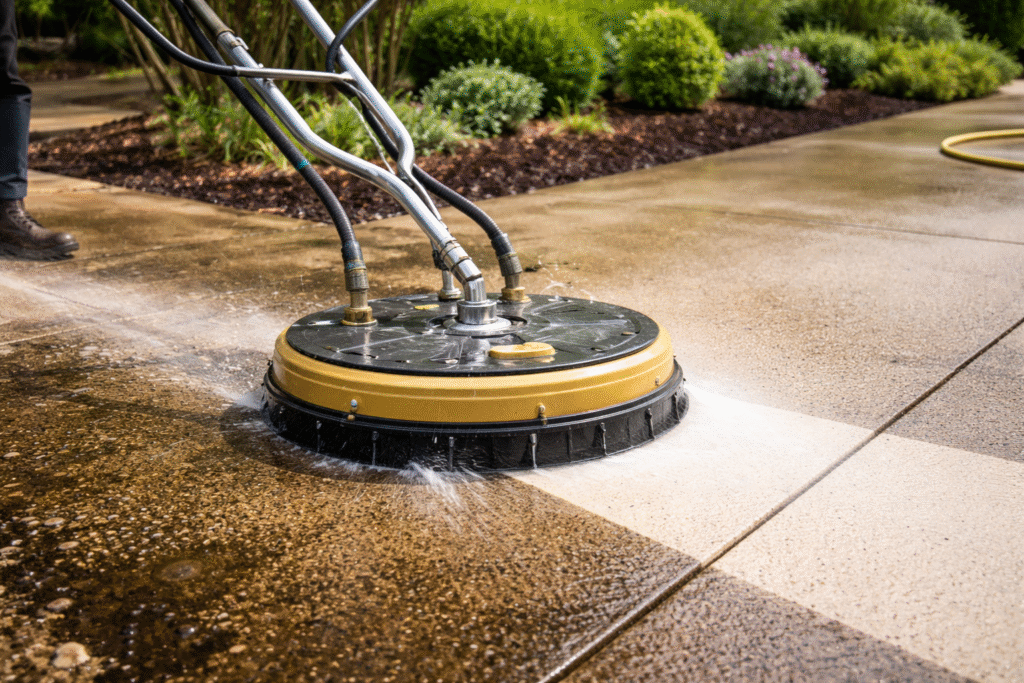
- Surface cleaner attachment (highly recommended)
- Concrete cleaner or degreaser (for stains)
- Stiff bristle brush
- Safety glasses and closed-toe shoes
- Gloves (especially when using chemicals)
For pressure washer safety and consumer guidance, visit:
U.S. Consumer Product Safety Commission (CPSC).
How to Pressure Wash My Driveway: Best Time to Do It
The best time to clean your driveway is when you have mild weather and enough time for drying.
Best conditions for pressure washing a driveway
- Overcast day or light sun
- Low wind (reduces overspray)
- No rain expected for 24 hours
- Temperature above 50°F (10°C)
Avoid extremely hot days because cleaners can dry too quickly and leave streaks.
How to Pressure Wash My Driveway: Best PSI & Nozzle Settings
Choosing the right PSI is critical. Too little pressure won’t clean well. Too much can permanently damage concrete.
Recommended PSI for driveway cleaning
- Light dirt: 1,500–2,000 PSI
- General driveway cleaning: 2,000–3,000 PSI
- Stubborn stains: 2,500–3,500 PSI (use caution)
Best nozzles for driveway pressure washing
- 40° nozzle (white): rinsing and gentle cleaning
- 25° nozzle (green): best all-around cleaning nozzle
- 15° nozzle (yellow): stronger cleaning (risk of etching)
- 0° nozzle (red): avoid (high damage risk)
Pro Tip: Use a surface cleaner attachment
A surface cleaner gives the most professional results because it cleans evenly and prevents zebra striping. It also reduces cleaning time significantly.
How to Pressure Wash My Driveway: Preparation Steps
Proper preparation makes a huge difference in results.
Step 1: Clear the driveway
Move cars, trash cans, toys, and furniture. Remove anything that could get wet or block your path.
Step 2: Sweep thoroughly
Sweep away leaves, dirt, and gravel. This prevents debris from being pushed around during washing.
Step 3: Protect nearby areas
Cover delicate plants and keep pets inside. If you’re using degreaser, pre-wet grass and landscaping to reduce chemical stress.
How to Pressure Wash My Driveway: Step-by-Step Instructions
Here is the exact process to follow if you want professional-looking results.
Step 1: Pre-rinse the surface
Start by rinsing the driveway with a 40° nozzle. This removes loose dirt and prepares the concrete for cleaning.
Step 2: Apply concrete cleaner (optional but recommended)
If your driveway has stains, apply a concrete cleaner or degreaser. Let it sit for 10–15 minutes (do not let it dry).
Step 3: Scrub stained areas
Use a stiff brush to scrub oil spots, tire marks, or rust stains. This helps lift grime from concrete pores.
Step 4: Pressure wash using consistent passes
Switch to a 25° nozzle or surface cleaner. Work in sections and clean using straight, overlapping passes. Keep the wand moving to avoid etching.
Step 5: Rinse thoroughly
Once the driveway is clean, rinse the entire area again to remove residue and prevent streaking.
How to Pressure Wash My Driveway: Removing Oil, Rust, and Algae
How to pressure wash my driveway to remove oil stains
Oil stains require a degreaser. Apply degreaser, let it dwell, scrub, then pressure wash. Hot water pressure washers work best for oil.
How to pressure wash my driveway to remove rust stains
Rust stains usually need a rust remover (often oxalic acid-based). Apply remover, let it dwell, scrub lightly, then rinse with controlled pressure washing.
How to pressure wash my driveway to remove algae or mildew
Algae can make concrete slippery. Use a concrete-safe cleaner and rinse thoroughly. For mold guidance, visit:
EPA Mold Resources.
How to Pressure Wash My Driveway: Mistakes to Avoid
If you want to know how to pressure wash my driveway without ruining it, avoid these common mistakes.
Driveway pressure washing mistakes
- Using a 0° red nozzle (causes etching)
- Holding the wand too close
- Cleaning in random patterns (creates stripes)
- Not pre-treating stains with cleaner
- Letting degreaser dry on the surface
- Ignoring cracks (water can worsen them)
FAQs About How to Pressure Wash My Driveway
How to pressure wash my driveway without leaving lines?
Use a surface cleaner attachment and overlap your passes evenly. Zebra striping usually happens when you stop or change distance while cleaning.
How to pressure wash my driveway with an electric pressure washer?
Electric pressure washers work well for light to moderate dirt. Use cleaner and a surface cleaner attachment for best results.
How to pressure wash my driveway if it has cracks?
Use lower PSI and avoid spraying directly into cracks. Consider sealing the driveway after cleaning.
How often should I pressure wash my driveway?
Most homeowners pressure wash once per year. In humid climates, twice per year may help prevent algae buildup.
Final Thoughts: How to Pressure Wash My Driveway the Right Way
How to pressure wash my driveway comes down to using safe PSI, the correct nozzle, and consistent cleaning technique. Start with prep work, use cleaner for stains, and consider a surface cleaner attachment for professional results.
With the right method, you can restore your driveway’s look, improve curb appeal, and keep your concrete cleaner for longer.

No Comments