
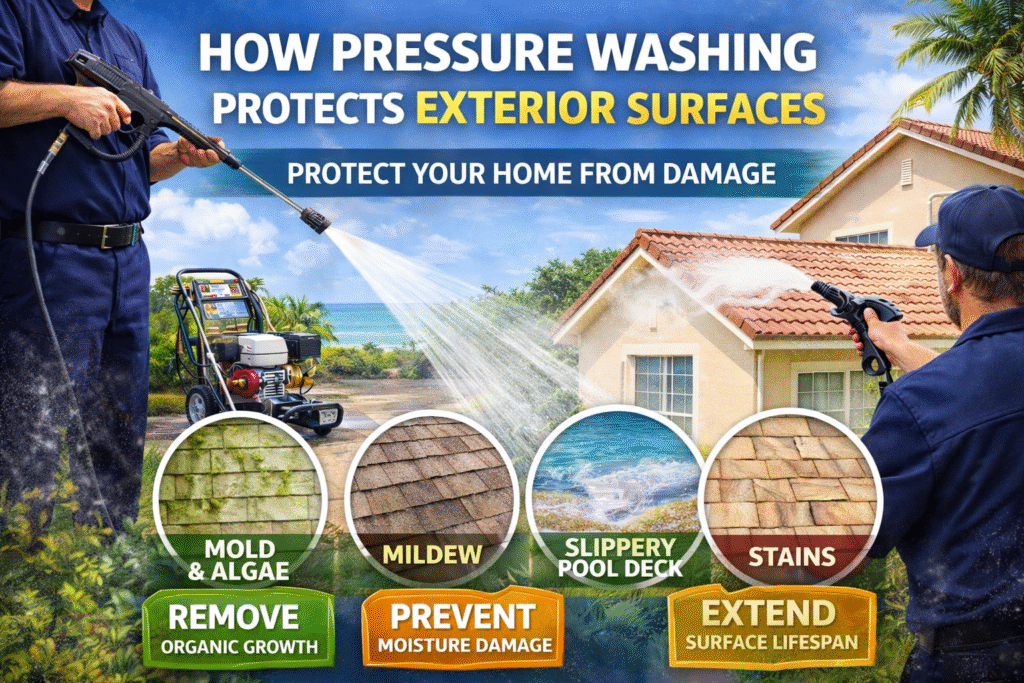


How Pressure Washing Protects Exterior Surfaces
Exterior surfaces are constantly exposed to environmental elements that cause dirt, algae, and mold to accumulate. While this buildup may initially appear to be a cosmetic issue, it can actually lead to structural damage if left untreated.
Pressure washing plays a critical role in protecting exterior surfaces by removing contaminants before they cause long-term deterioration.
Common Contaminants That Damage Surfaces
Several types of contaminants accumulate on exterior surfaces. Mold and mildew thrive in humid environments and can slowly break down organic materials. Algae can stain roofs and siding while trapping moisture that contributes to deterioration.
Dirt, pollen, pollution residue, and debris also accumulate over time. These substances can cause permanent staining and reduce the lifespan of building materials.
Materials That Benefit From Pressure Washing
Many exterior materials benefit from routine pressure washing. Concrete surfaces such as driveways and sidewalks accumulate stains and organic growth that can become difficult to remove if left untreated.
Brick and stone surfaces also collect debris and algae. When cleaned regularly, these materials retain their appearance and structural integrity.
Preventing Expensive Repairs
Routine cleaning can prevent costly repairs. Mold and algae retain moisture that can damage roofing materials, siding, and wooden structures.
By removing these contaminants early, homeowners can avoid deterioration that may require expensive replacements.
Frequently Asked Questions
Does pressure washing prevent damage?
Yes. Pressure washing removes harmful contaminants that can deteriorate building materials.
What surfaces should be pressure washed?
Concrete driveways, sidewalks, patios, and many exterior surfaces benefit from routine pressure washing.
No Comments