
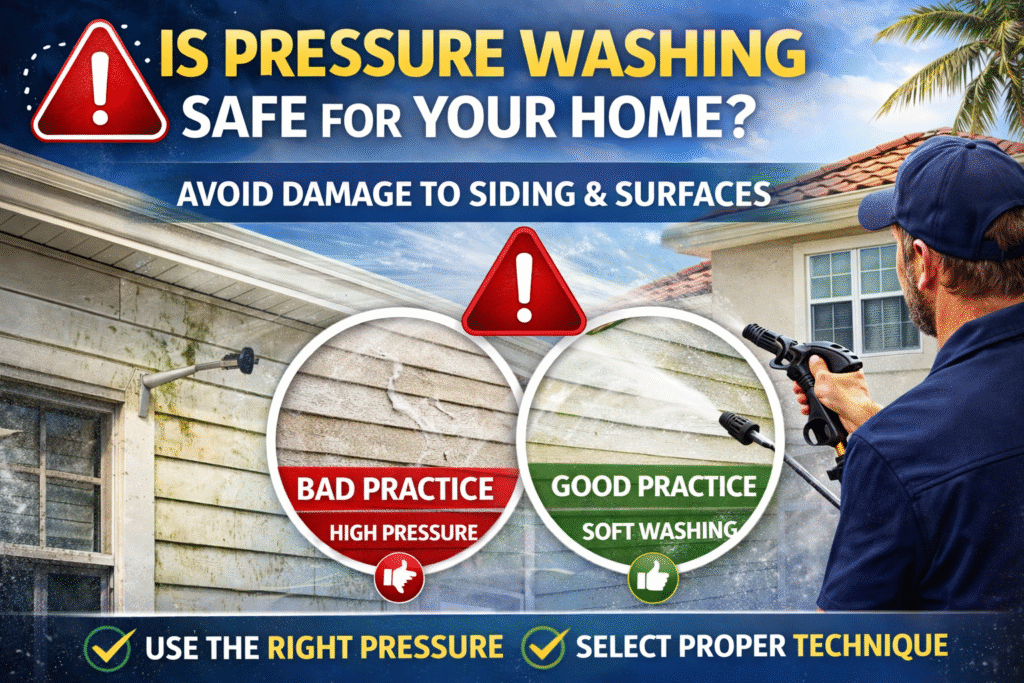


Is Pressure Washing Safe for Your Home?
Pressure washing is one of the most effective ways to clean exterior surfaces, but many homeowners wonder whether the process is safe for their property. When performed correctly by trained professionals, pressure washing is a safe and highly effective cleaning method that removes dirt, mold, algae, and environmental contaminants without damaging exterior materials.
However, like any tool, pressure washing equipment must be used properly. The pressure produced by professional machines can exceed 3,000 PSI, which is powerful enough to remove stubborn stains and debris from hard surfaces. If used incorrectly, high pressure can damage certain materials such as siding, roofing, wood, and painted surfaces.
Understanding when and how pressure washing should be used is essential for protecting your home while achieving the best cleaning results.
How Pressure Washing Works
Pressure washing systems use specialized pumps to increase water pressure and direct it through a spray nozzle. The force created by the pressurized water removes dirt, algae, mold, mildew, and stains from surfaces.
The cleaning process works by breaking apart contaminants and lifting them away from the surface. Professional technicians adjust the pressure level and nozzle type depending on the material being cleaned. Hard surfaces like concrete can handle higher pressure, while delicate surfaces require lower pressure or alternative cleaning methods.
When Pressure Washing Is Safe
Pressure washing is safe when it is used on durable surfaces that can withstand higher pressure levels. These surfaces typically include concrete driveways, sidewalks, patios, brick walls, and stone surfaces.
Concrete surfaces benefit greatly from pressure washing because the process removes dirt, oil stains, algae, and other contaminants that accumulate over time. Brick and stone surfaces also respond well to pressure washing when proper techniques are used.
These materials are strong enough to handle the force generated by pressure washing equipment without suffering structural damage.
Surfaces That Require Soft Washing Instead
While pressure washing is effective for hard surfaces, some materials require a gentler approach. Soft washing is a cleaning method that uses lower pressure combined with specialized cleaning solutions to remove organic growth safely.
Soft washing is commonly used for roofs, siding, stucco, painted wood, and vinyl surfaces. These materials can be damaged if high pressure is applied directly.
The cleaning solutions used in soft washing break down mold, algae, and bacteria at the root. After the contaminants are dissolved, low-pressure water rinses the surface clean.
Why Professional Pressure Washing Matters
Many homeowners attempt to pressure wash their homes using rental equipment or consumer-grade machines. While this may seem convenient, improper pressure washing techniques can lead to costly damage.
Professional exterior cleaning companies have the training and experience needed to determine the correct cleaning method for each surface. They also use commercial-grade equipment and specialized detergents designed to remove contaminants effectively without damaging materials.
Hiring professionals ensures that the right pressure levels and cleaning methods are used for each area of your property.
Common Mistakes in DIY Pressure Washing
One of the most common mistakes homeowners make when pressure washing is using excessive pressure. High pressure can strip paint, damage siding, and force water behind building materials.
Another common mistake is using the wrong spray nozzle. Different nozzles create different spray patterns, and selecting the wrong one can concentrate too much force on a single area.
Improper cleaning techniques can also damage roof shingles or etch concrete surfaces. These risks are significantly reduced when experienced professionals perform the work.
Benefits of Safe Pressure Washing
When pressure washing is performed correctly, it provides several important benefits for homeowners. The process removes harmful contaminants that cause stains and deterioration. It also restores curb appeal and improves the overall appearance of the property.
Routine exterior cleaning helps extend the lifespan of building materials by removing mold and algae before they cause damage. Pressure washing can also improve safety by eliminating slippery surfaces around walkways and pool decks.
Frequently Asked Questions
Is pressure washing safe for siding?
Pressure washing can be safe for siding when the correct pressure levels and techniques are used. In many cases, soft washing is recommended instead of high pressure.
Can pressure washing damage a roof?
Yes. Roofs should typically be cleaned using soft washing rather than high-pressure cleaning to prevent damage to shingles.
Is professional pressure washing worth it?
Yes. Professional pressure washing ensures that surfaces are cleaned safely using the correct pressure levels and techniques.
No Comments