
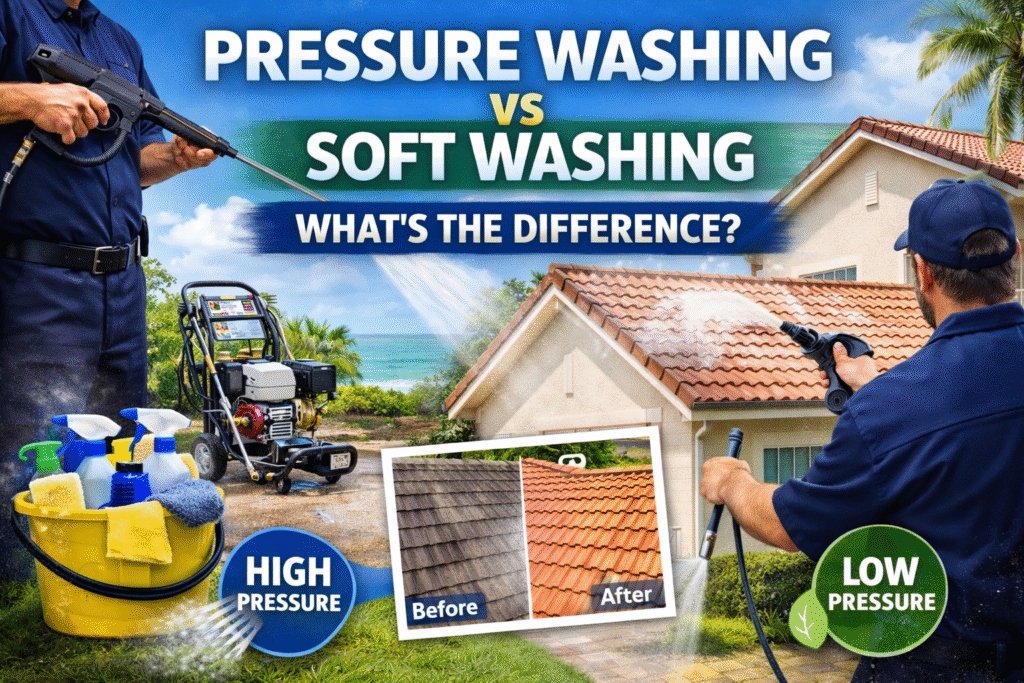


Pressure Washing vs Soft Washing: What’s the Difference?
If you’ve been researching exterior cleaning services, you’ve probably heard the terms pressure washing and soft washing. While they are often used interchangeably, these two cleaning methods are actually very different.
Understanding the difference between pressure washing and soft washing is important because using the wrong method can damage surfaces or fail to properly remove contaminants like algae and mold.
In Florida cities like Sarasota, Bradenton, and Lakewood Ranch, exterior cleaning is especially important due to humidity, rain, and coastal salt air. Homes in this region frequently develop algae growth, mildew, mold, and stains that require specialized cleaning techniques.
This guide explains everything homeowners need to know about pressure washing vs soft washing, including how each method works, which surfaces should be cleaned with each technique, and why professional exterior cleaning companies use both methods.
What Is Pressure Washing?
Pressure washing is a cleaning method that uses high-pressure water to remove dirt, grime, oil stains, algae, and debris from hard exterior surfaces.
Pressure washers use powerful pumps that force water through a small nozzle, creating a concentrated stream capable of removing stubborn buildup.
This cleaning method is most effective on durable surfaces such as:
- Concrete driveways
- Sidewalks
- Patios
- Brick surfaces
- Stone walkways
- Parking lots
- Commercial building exteriors
Pressure washing is extremely effective for removing dirt and stains, but it must be used carefully because excessive pressure can damage certain surfaces.
What Is Soft Washing?
Soft washing is a cleaning method that uses low water pressure combined with specialized cleaning solutions to safely remove organic growth such as algae, mold, mildew, and bacteria.
Instead of relying on high pressure, soft washing uses biodegradable detergents that break down contaminants at their root.
Soft washing is commonly used on delicate surfaces such as:
- Roofs
- Stucco siding
- Vinyl siding
- Wood surfaces
- Screen enclosures
- Pool cages
- Painted surfaces
Because the cleaning solution kills organic growth rather than just rinsing it away, soft washing provides longer-lasting results.
Pressure Washing vs Soft Washing: Key Differences
Cleaning Method
Pressure Washing: Uses high-pressure water to blast dirt and stains from surfaces.
Soft Washing: Uses low pressure combined with cleaning solutions that dissolve organic growth.
Best Surfaces
Pressure Washing:
- Driveways
- Sidewalks
- Concrete
- Brick
- Stone surfaces
Soft Washing:
- Roofs
- House siding
- Stucco
- Vinyl siding
- Screen enclosures
Effectiveness Against Mold and Algae
Pressure washing removes visible contaminants from surfaces, but it does not always kill algae or mold at the root.
Soft washing treatments penetrate and eliminate organic growth, preventing it from returning as quickly.
Surface Safety
High pressure can damage certain materials like shingles, siding, and painted wood.
Soft washing uses low pressure, making it safer for delicate surfaces.
Why Soft Washing Is Important in Florida
Florida’s humid climate encourages rapid algae and mold growth. Homes in Sarasota and Bradenton commonly develop black streaks on roofs and green algae on siding.
The most common roof staining problem is caused by a bacteria called Gloeocapsa Magma. This algae feeds on limestone filler in asphalt shingles.
Soft washing eliminates this growth safely without damaging roofing materials.
Common Areas That Require Pressure Washing
Pressure washing is ideal for durable surfaces that can withstand high water pressure.
- Driveways
- Sidewalks
- Pool decks
- Patios
- Brick walls
- Commercial walkways
These areas collect dirt, oil stains, tire marks, and algae buildup that can be removed effectively with high-pressure cleaning.
Common Areas That Require Soft Washing
- Roof shingles
- Stucco walls
- Vinyl siding
- Pool cages
- Lanai screens
- Painted exterior surfaces
Soft washing protects these surfaces while still removing mold and organic contaminants.
Benefits of Professional Exterior Cleaning
Protects Your Property
Using the correct cleaning method prevents damage and preserves building materials.
Improves Curb Appeal
Clean homes look newer and more attractive.
Extends Surface Lifespan
Removing mold and algae prevents deterioration.
Increases Property Value
Homes with clean exteriors often sell faster and for higher prices.
How Often Should Exterior Surfaces Be Cleaned?
In Florida’s humid climate, regular exterior cleaning is essential.
- Driveways – once per year
- Pool decks – once per year
- House washing – every 1 to 2 years
- Roof cleaning – every 2 to 3 years
Routine cleaning prevents heavy buildup and protects surfaces.
Frequently Asked Questions
What is the difference between pressure washing and soft washing?
Pressure washing uses high-pressure water to remove dirt and stains from hard surfaces, while soft washing uses low pressure and cleaning solutions to remove organic growth safely.
Is soft washing better than pressure washing?
Soft washing is better for delicate surfaces like roofs and siding, while pressure washing is best for hard surfaces such as concrete and brick.
Can pressure washing damage siding?
Yes, high pressure can damage siding if used incorrectly. Soft washing is typically recommended for siding and painted surfaces.
Which method is best for roof cleaning?
Soft washing is the safest and most effective method for cleaning roofs.
How often should homes be washed in Florida?
Most homes should be cleaned every 12 to 18 months due to humidity and algae growth.
No Comments