
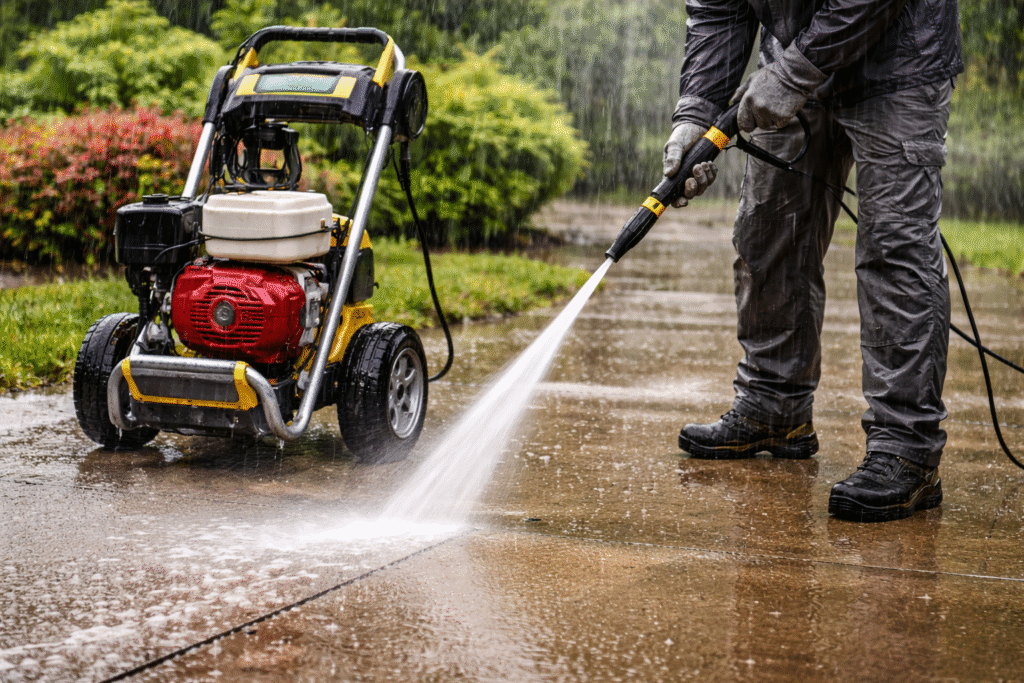


Should You Pressure Wash in the Rain? (What’s Safe, What’s Not, and Best Practices)
Should you pressure wash in the rain? It’s a common question—especially when you finally have time to clean your driveway, siding, or deck, but the weather won’t cooperate. The short answer is: sometimes you can, but most of the time you shouldn’t.
Light rain may not ruin pressure washing results, but it can create safety hazards, reduce cleaning effectiveness, and interfere with detergents. Heavy rain and storms can also increase the risk of electrical shock, slipping, and property damage.
In this guide, we’ll break down exactly when pressure washing in the rain is okay, when you should avoid it completely, and what professional cleaners recommend for the best results.
Table of Contents
- Should You Pressure Wash in the Rain? Quick Answer
- Should You Pressure Wash in the Rain: Why Weather Matters
- Should You Pressure Wash in the Rain: Safety Concerns
- Should You Pressure Wash in the Rain: How It Affects Results
- Should You Pressure Wash in the Rain: Detergent & Dwell Time Issues
- Should You Pressure Wash in the Rain: When It’s Actually Okay
- Should You Pressure Wash in the Rain: When You Should NOT Do It
- Should You Pressure Wash in the Rain: Best Practices (Pro Tips)
- FAQs About Should You Pressure Wash in the Rain
Should You Pressure Wash in the Rain? Quick Answer
Should you pressure wash in the rain? In most cases, no—especially if it’s heavy rain, lightning, or windy storm conditions. Light rain can be manageable for certain projects, but rain can reduce cleaning effectiveness, wash away detergent too quickly, and create dangerous slippery surfaces.
If you want the best results and the safest conditions, pressure washing is best done on a dry day with mild temperatures and low wind.
Should You Pressure Wash in the Rain: Why Weather Matters
Pressure washing is more than spraying water. Good results depend on:
- Proper water pressure
- Consistent technique
- Detergent dwell time
- Safe footing and visibility
- Drying conditions after cleaning
Rain affects nearly all of these factors. Even if you can physically pressure wash in the rain, the quality of the outcome may not be worth the effort.
Should You Pressure Wash in the Rain: Safety Concerns
Safety is the biggest reason professionals avoid pressure washing in wet weather.
Key safety risks of pressure washing in the rain
- Slip hazards: Wet concrete, algae, and overspray create dangerous footing
- Electrical risk: Electric pressure washers and extension cords can become hazardous
- Lightning danger: Pressure washing during storms increases risk of injury
- Poor visibility: Rain makes it harder to see streaks, missed spots, or surface damage
For consumer product safety guidance, visit:
U.S. Consumer Product Safety Commission (CPSC).
Important note on lightning
If there is thunder or lightning nearby, stop immediately. No cleaning job is worth the risk.
Should You Pressure Wash in the Rain: How It Affects Results
Even if safety isn’t an issue, rain can affect how clean your surfaces get.
How rain can hurt pressure washing results
- Detergent gets diluted and runs off faster
- Hard-to-see streaking and zebra striping
- Uneven cleaning due to runoff
- More water pooling on flat surfaces
- Slower drying time
For example, cleaning a driveway in the rain can leave muddy runoff that re-stains areas you just cleaned.
Should You Pressure Wash in the Rain: Detergent & Dwell Time Issues
Detergent is a major part of effective pressure washing—especially for siding, decks, and mildew removal. In most cases, the cleaner does the work and the rinse removes it.
Why dwell time matters
Dwell time is how long detergent stays on the surface to break down grime. Rain can wash away detergent before it works, meaning:
- You use more chemicals
- You spend more time reapplying
- You may increase PSI to compensate (which increases damage risk)
For mold and mildew information, visit:
EPA Mold Resources.
Should You Pressure Wash in the Rain: When It’s Actually Okay
There are a few situations where pressure washing in the rain can be acceptable.
It may be okay if:
- It’s only light drizzle (no wind or lightning)
- You’re using a gas pressure washer (not electric)
- You’re cleaning a surface that doesn’t require detergent dwell time
- You have good traction and safe footwear
- You can still see what you’re doing clearly
For example, rinsing off loose mud from concrete in light rain may be fine, but deep cleaning or stain removal is usually better postponed.
Should You Pressure Wash in the Rain: When You Should NOT Do It
In many cases, pressure washing in the rain is a bad idea.
Do NOT pressure wash if:
- There is thunder or lightning
- Rain is heavy enough to affect visibility
- It’s windy (overspray and loss of control)
- You’re using an electric pressure washer
- You’re cleaning ladders, roofs, or elevated surfaces
- You’re planning to stain, seal, or paint afterward
If your project involves painting or staining, rain is a deal breaker because surfaces must dry completely before coating.
Should You Pressure Wash in the Rain: Best Practices (Pro Tips)
If you absolutely must work during wet conditions, follow these best practices to reduce risk.
Pressure washing in rainy weather tips
- Use a gas pressure washer (avoid electric units)
- Wear slip-resistant shoes
- Avoid ladders—use extension wands instead
- Use lower PSI and controlled technique
- Skip detergents if rain will wash them away
- Work in smaller sections to reduce runoff problems
Pro Tip: Reschedule when possible
Most professionals recommend waiting for dry weather. You’ll get better results, use less chemical, and finish faster.
FAQs About Should You Pressure Wash in the Rain
Should you pressure wash in the rain with an electric pressure washer?
No. Electric units increase the risk of shock. It’s safer to wait for dry weather.
Should you pressure wash in the rain if you’re only rinsing?
Light rinsing may be okay in drizzle, but heavy rain still creates safety risks and reduces visibility.
Should you pressure wash in the rain before painting?
No. Painting requires a clean, fully dry surface. Rain slows drying and can cause paint failure.
Should you pressure wash in the rain before staining a deck?
No. Decks must dry 24–48+ hours before staining. Rain delays drying and can ruin stain adhesion.
Final Thoughts: Should You Pressure Wash in the Rain?
Should you pressure wash in the rain? In most cases, it’s better to wait. Rain creates safety hazards, reduces detergent effectiveness, and can leave streaky results. Light drizzle may be manageable for small rinse jobs, but heavy rain and storms are a hard no.
If you want the best cleaning results and the safest working conditions, choose a dry day with mild temperatures and low wind.
No Comments